By Billy Ray Valentine CBNC Business News
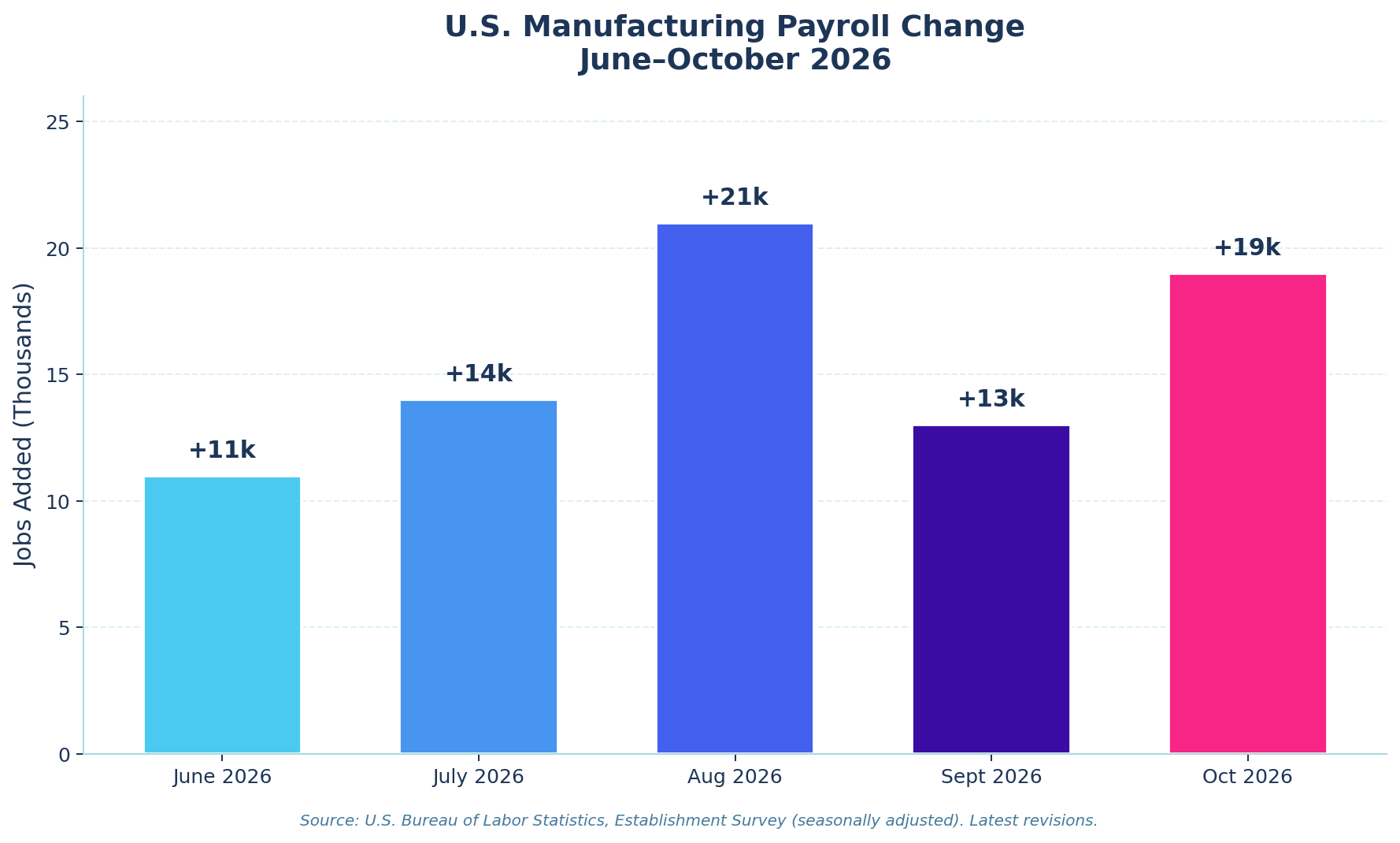
19,000. That is how many manufacturing paychecks the Bureau of Labor Statistics counted in October 2026 when the Employment Situation hit the wire Friday morning, November 6. Durable goods did the heavy lift. Nondurable lines gave some back. The people who still show up, still punch the clock, and still carry their own water got more slots on the plant roster. They did not get a clean win on the grocery receipt.
Who pays? Look past the headline cheer. Average hourly earnings for all private workers rose 0.4 percent on the month to $38.00 and 3.1 percent over the year. Production and nonsupervisory pay moved to $32.75, up about 3.3 percent year over year. September consumer prices were still running 3.7 percent. That gap is the moral hazard. Celebrate the payroll beat. Ignore the fact that the same household is still losing ground to the cart. Debt is not free. The next generation does not get a rebate when the tape confuses a job count with a raise that clears inflation.
This is America. Factories added heads for a fifth straight month. Manufacturing employment printed 12.681 million in October, up 19,000 from a revised September and up roughly 78,000 over the past year on the detail tables that track the sector. Durable-goods makers added 25,000 jobs. Nondurable goods cut 6,000. Computer and electronic product manufacturing led the plant-level board with about 6,700 jobs. Fabricated metal products added about 5,900. Motor vehicles and parts added about 4,100. Those are real lines, real shifts, real overtime slips — not a press-release ribbon cutting from three weeks ago.
The hours tell the floor story without the spin. The manufacturing workweek held at 40.5 hours. Overtime edged up 0.1 hour to 3.1 hours. The people who drink the water after they carry it are still putting in the week. They are not floating on a soft schedule. They are running metal, boards, and vehicle parts while the broader labor print also flashed stress lights the wire loves to bury under the beat.
U-6 underemployment jumped to 7.9 percent from 7.6 percent. Part-time for economic reasons surged by hundreds of thousands. Long-duration unemployment — people out 27 weeks or more — pushed near 1.96 million, the worst stretch since late 2021 on several reads of the household survey. Median time spent unemployed lengthened. That is not a boom for every American who lost a slot and is still looking. That is a market that hires in some buildings and strands others. Subsidize the losers with easy talk about “strength,” and you promote the bad behavior of pretending a headline erases a stretched job search.
Total nonfarm payrolls rose 165,000 in October, crushing the Wall Street cluster that had parked near 59,000 to 62,000. August and September were revised up a combined 84,000. Professional and business services added about 70,000. Health care added tens of thousands. Transportation and warehousing added roughly 25,000. Manufacturing’s 19,000 was not the biggest sector print. It was the one that matters for the America that still makes things instead of only managing the meetings about things.
Who gained on the plant side is clear enough. Electronics, fabricated metal, and auto-related lines took the incremental heads. Who paid is the worker whose wage print still trails the September CPI and the borrower who will eat the Fed reaction. Rate-hike odds for December climbed after the beat. The same factory household that just got the overtime tick can watch mortgage and auto money get dearer because the payroll number “surprised to the upside.” That is who pays when policy treats a strong jobs print as permission to tighten while real take-home after inflation stays thin — private aggregate payrolls were only about 0.7 percent ahead of prices as of the September inflation read on several income proxies.
Do not confuse this with neutrality. The incentive is wrong when officials and desks treat 19,000 manufacturing jobs as a victory lap while 3.7 percent inflation still outruns a 3.1 percent private wage gain. The people who still pay their bills do not get paid in press conferences. They get paid in hours, overtime, and a cart that keeps climbing. Promote the bad behavior of headline worship and you teach the next generation that a seasonally adjusted thousand is the same thing as grocery-store ground.
BLS data, IndustryWeek’s manufacturing read, HotAir’s conservative desk breakdown, CNBC’s wire, and TheStreet Pro’s sector detail all land on the same core facts released November 6, 2026: manufacturing +19,000; durables strong; wages up on the month; inflation still the higher bar. Official releases supply the raw counts. They do not supply the frame. The frame is simple. American plants hired. American workers still carry the water. The moral hazard is pretending the beat closes the bill.
Carry the water means you count the jobs and you count the squeeze. Nineteen thousand factory paychecks is real. A wage path that still loses to 3.7 percent inflation is also real. Underemployment moving the wrong way is real. A December hike priced on the back of that beat is real. Who pays is not a mystery. The people on the floor pay — first at the time clock, then at the store, then at the loan window — while anyone still trying to subsidize comfort with other people’s debt finds out again that debt is not free.
Sources:
- https://www.industryweek.com/talent/news/55417255/october-jobs-report-us-adds-165000-jobs-as-unemployment-falls-slightly-to-41
- https://hotair.com/ed-morrissey/2026/11/06/now-they-tell-us-strengthening-jobs-market-blew-out-expectations-in-october-n3820732
- https://www.cnbc.com/2026/11/06/jobs-report-october-2026.html
- https://pro.thestreet.com/market-commentary/october-payrolls-top-every-forecast-as-unemployment-falls-back-to-4-1
- https://data.economicimpact.com/releases/jobs