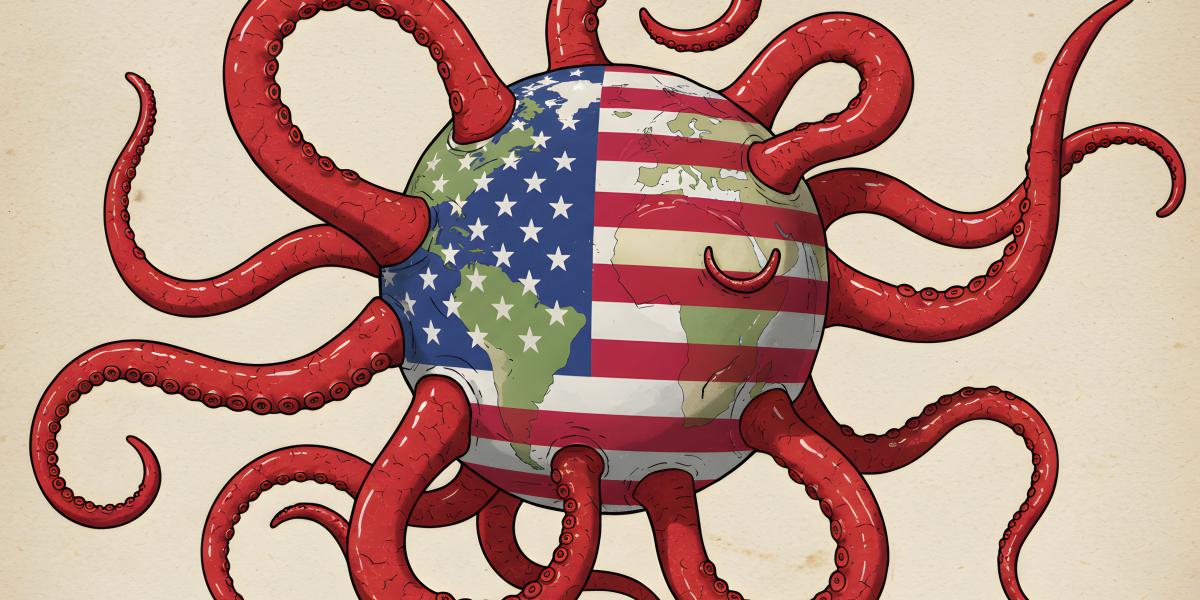
History presents us with a troubling paradox: states that most fervently defend economic freedom at home often pursue the most aggressive foreign policies. Nineteenth-century Britain—the birthplace of free trade and the Industrial Revolution—was also home to the largest colonial empire in history. Today, the United States—certainly one of the freest economies—maintains nearly 800 military bases around the world.
In his article “Banking, Nation States, and International Politics: A Sociological Reconstruction of the Present Economic Order,” published in The Review of Austrian Economics (Volume 4, 1990, pp. 55–87), Hans Hermann Hoppe highlights a significant paradox: the more liberal a state is internally, the more likely it is to pursue an aggressive imperialist policy externally.
Indeed, there is a link between a nation’s internal liberalism—the ability of individuals…