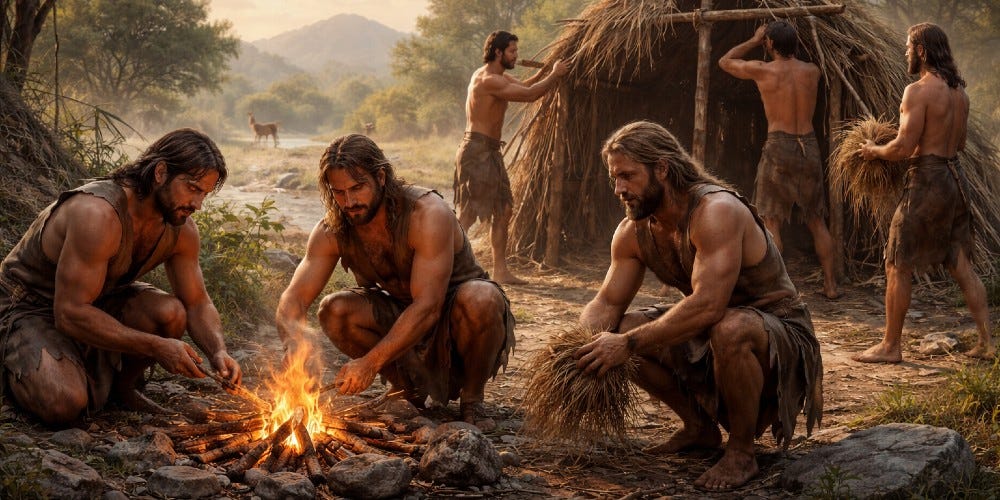
For more than a century, the story told by secular academia has been confidently linear: primitive ape-like creatures slowly evolved into modern humans over hundreds of thousands of years, with Neanderthals representing a kind of evolutionary dead-end — brutish, grunting near-humans who lacked the cognitive sophistication to survive alongside Homo sapiens. This narrative has been presented not as a hypothesis but as settled science, and it has shaped how Western culture thinks about human origins.
But what if the story is wrong — not only scientifically, but fundamentally?
A growing body of archaeological and genetic evidence is forcing mainstream researchers to radically revise what they thought they knew about so-called “primitive” humans. At the same time, a careful reading of Scripture suggests that the people described in early Genesis may align far more closely with these…