
By Zorina Grey CBNC News
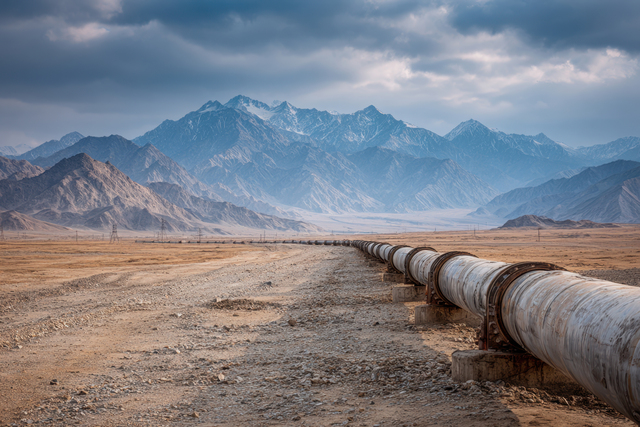
The United States is spending fuel, aircraft hours and sailors’ time to cut off Iran’s revenue at sea, and a NATO ally has just signed up to keep paying Tehran by pipeline for another six years. Turkey’s state pipeline company BOTAS and the National Iranian Gas Company have extended their natural gas import contract through 2032, according to Bloomberg and the Turkish energy press, keeping one of the regime’s few remaining export markets open while American forces enforce a blockade in the Gulf of Oman.
The terms reported so far are simple. The previous 25-year contract took effect in 2001 and expired at the end of July. Gas kept moving after that date under make-up volumes, meaning gas Turkey had paid for but never received under the old deal. The Turkish publication Enerji Gunlugu, citing sector sources, reported that BOTAS’s license to import Iranian gas now runs until April 18, 2032, that the annual volume stays at roughly 10 billion cubic meters delivered through the Dogubayazit entry point, and that the price formula is unchanged. Bloomberg reported that it was unclear whether the volume had changed. Neither company has confirmed the agreement publicly.
The American side of the ledger is also on the record. U.S. Central Command reports that its forces have redirected 158 commercial vessels and disabled six that refused to comply with the blockade, the latest being the bulk carrier Pacific Archer, which left Bandar Abbas and ignored repeated warnings. The strategic objective is plain. Washington wants Tehran cut off from the cash that funds its missiles and its proxies until it accepts a deal, and it wants that done without a wider ground war.
The collectivist claim is that energy ties between neighbors are a stabilizing force that should be walled off from great-power pressure, and that Ankara is simply keeping homes warm. That claim fails against capacity first. Iran supplied 7.7 billion cubic meters of Turkey’s 58.4 billion cubic meters of gas imports in 2025, about 13.2 percent, according to Turkey’s Energy Market Regulatory Authority. That made Iran only the fourth-largest supplier, behind Russia, Azerbaijan and the United States, which ships liquefied natural gas to Turkish terminals. Turkey’s own energy minister, Alparslan Bayraktar, said in June 2025 that Turkey could replace Iranian imports with infrastructure it has already built.
The claim fails against incentives as well. A six-year contract signed in the middle of a war tells Tehran that its pipeline customers will outlast American pressure, which is exactly the calculation the blockade is designed to break. Iranian deliveries also routinely fall short in winter, when Iran’s domestic demand peaks, so Ankara is locking in an unreliable supplier for the sake of a political signal.
The claim fails against American interest most of all. Bayraktar said in September that Ankara had received no U.S. proposal to stop buying Iranian gas. The alternative is already on the dock, because American LNG is in the Turkish system today and could take a larger share.
The contradiction is direct. American sailors are stopping ships to drain Iran’s treasury, and an alliance member that shelters under American guarantees has chosen to refill it through 2032.
Sources:
turkiyetoday.com/business/turkiye-reportedly-prolongs-iran-gas-import-deal-through-2032-3233326
theinsightinternational.com/turkey-iran-gas-import-deal-extended-2032-botas-nigc-us-pressure-november-27
iranintl.com/en/202611270988
breitbart.news/watch-u-s-military-strikes-commercial-ship-that-refused-to-comply-with-naval-blockade-near-strait-of-hormuz