

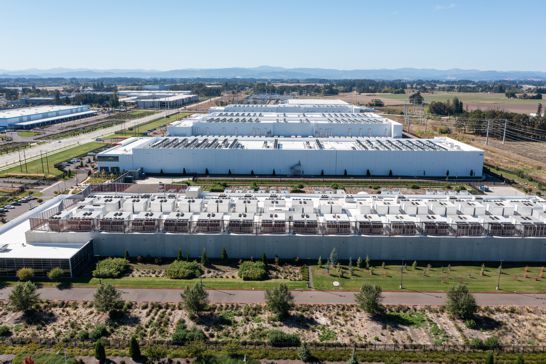
Photo – Hrach Hovhannisyan/Shutterstock.com
By Billy Ray Valentine CBNC Business News
One hundred fifty days. That is how long a challenger would get to sue over a federal environmental review under the permitting bill the Senate passed Thursday night, 62 to 33. Today that window can run as long as six years. Six years for a lawyer to sit on a file while a power line, a pipeline or a road sits unbuilt. And who pays for those six years? The family paying the light bill. The builder paying interest on land he cannot touch. The worker waiting on a job that never breaks ground.
This is America. You get your say. You do not get to hold the whole country hostage for six years after you had it.
THE VOTE
The Bipartisan American Affordability and Jobs Act passed the Senate on a 62-33 vote. It was written by Republicans Shelley Moore Capito of West Virginia and Mike Lee of Utah with Democrats Sheldon Whitehouse of Rhode Island and Martin Heinrich of New Mexico. Thirty-one Democrats voted no, joined by Republicans Josh Hawley and Mike Rounds, according to Roll Call. The bill now goes to the House after Thanksgiving. Speaker Mike Johnson has said it can pass there, and President Trump urged senators to get it done before Democrats take control of Congress in January.
Here is what it does. It sets hard deadlines for federal environmental reviews under the National Environmental Policy Act, known as NEPA, the 1970 law that makes agencies study a project before they approve it. After a review is finished, participating agencies would get 90 days to decide outstanding permits. It narrows who can sue: you have to have raised your objection during the public comment period and show a direct harm. It sends NEPA challenges straight to the federal appeals courts. And it caps the filing window at 150 days.
THE COST OF WAITING
Here is the number that should make you angry. The average federal environmental impact statement has taken 4.5 years to finish, according to Council on Environmental Quality data cited by the R Street Institute. One in four took more than six years. Nearly one in 10 waited more than a decade. A decade. Kids start kindergarten and finish middle school while a permit sits in a drawer.
That delay is not free. Debt is not free. Every month a project waits, somebody is paying interest on it, and that bill shows up in the price of power, the price of steel, and the price of a house. The National Association of Home Builders backed this bill for a reason. Builders live and die on the cost of waiting.
THE DATA CENTER RIDER
Now the part every household should read. The bill would require new data centers of 20 megawatts or more to pay the full incremental cost of the grid built to serve them, and it would bar utilities from shifting those costs onto regular customers. Whitehouse called it “stopping data centers’ free ride.”
He is right about the free ride. The average American home paid 18.19 cents a kilowatt-hour for electricity from January through August, according to the Energy Information Administration. A year earlier it was 17.03 cents. That is a 6.8% jump. On an example home using 900 kilowatt-hours a month, that is about $10.44 more every month, roughly $125 a year. The family in the ranch house should not be underwriting the server farm down the road. That is moral hazard. When a trillion-dollar company can stick the neighbors with its power lines, you promote bad behavior. You subsidize the biggest balance sheets in America with the smallest ones.
There is a catch, and it should be fixed in the House. A manager’s amendment meant to keep artificial intelligence hyperscalers from slipping through an “information services” loophole never got a vote, according to Roll Call. If that language stays loose, the companies with the best lawyers will find the door. Close it.
WHO PAYS
Opponents say the bill tilts toward oil and gas. Sen. Jeff Merkley said it “accelerates the extraction and burning of fossil fuels.” Some tribal groups and environmental organizations want the whole thing pushed into the next Congress. Fine. Make the argument. But be honest about who pays while you make it.
The lineman who wants to string wire pays. The family whose power bill went up 6.8% pays. The builder who cannot get a road permitted to his subdivision pays. The next generation pays for every project that costs double because it took a decade. Reward the people who carry the water. Do not let a six-year lawsuit clock make them drink everybody else’s bill.
The House has one job after Thanksgiving. Pass it, close the hyperscaler loophole, and let America build.
Sources
- rollcall.com/2026/11/19/sweeping-permitting-overhaul-passes-senate-on-to-house
- dailycallernewsfoundation.org/2026/11/20/senate-passes-landmark-permitting-reform-bill
- nbcnews.com/politics/congress/senate-passes-sweeping-bill-simplifying-permitting-rules-build-america-rcna610196
- epw.senate.gov/press/rep/senate-passes-capitos-bipartisan-american-affordability-and-jobs-act
- reedsmith.com/our-insights/blogs/ehs-law-insights/102o6j7/federal-permitting-reform-five-proposed-changes-that-could-reshape-project-devel
- rstreet.org/commentary/baaja-blast-part-2-what-does-permitting-reform-mean-for-the-environment
- c2es.org/document/comprehensive-summary-of-the-bipartisan-american-affordability-and-jobs-act
- eia.gov/electricity/monthly/epm_table_grapher.php