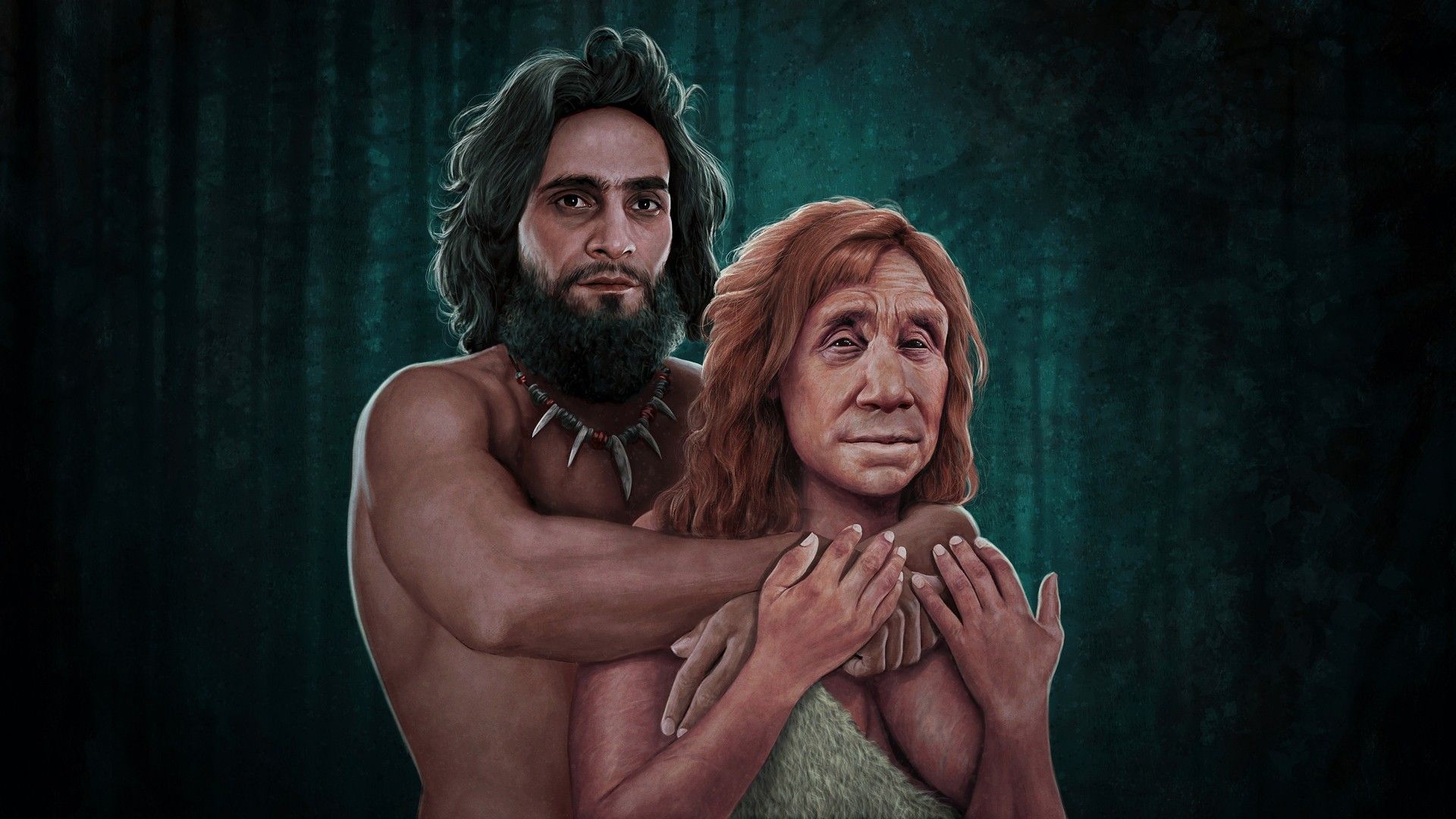
The group had traveled for thousands of miles, crossing Africa and the Middle East until finally reaching the dimly lit forests of the new continent. They were long-vanished members of our modern human tribe, and among the first Homo sapiens to enter Europe.
There, these people would likely have encountered their distant cousins: Neanderthals.
These small bands of modern-human relatives had hooded brows, large heads and squat bodies, and they had spent epochs acclimating to Europe’s colder climate. At several points across millennia, these two forms of humanity would meet, mingle and mate.
Tens of thousands of years later, these ancient encounters have left traces in the genetic code of billions of humans alive today. The lingering genes affect us in ways large and small, from our appearance to our risk of disease.
“In some places in our genome, we’re more Neanderthal…