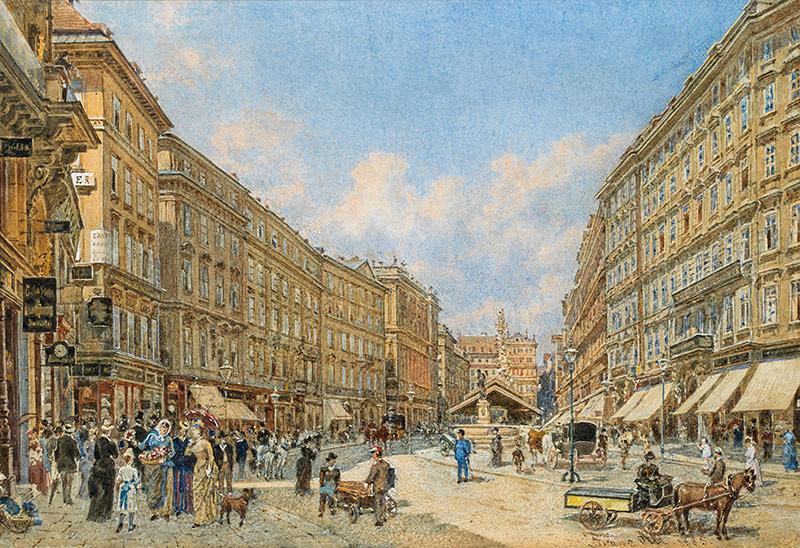
From Wikimedia Commons: Der Graben in Wien gegen den Kohlmarkt (Franz Alt, 1885)
Stefan Zweig’s tragic end resonated perfectly with the despair that he felt about the fate of Europe and civilized customs. A renowned Austrian-Jewish author of short stories and historical biographies, he had a large international audience during the interwar period. His elegant prose and psychological depth captured the fading world of the Austro-Hungarian Empire whose special blend of petty-bourgeois rigidity and scientific ingenuity he revered like childhood memories. As emotions prompted by the decline of Western civilization, challenged from within by barbarians, Zweig’s grief and despair in exile are as relevant today as they were 85 years ago. Unfortunately.
In 1934, Zweig, like other intellectuals and Jews before and after him, was exiled by the rise of Nazism. He first emigrated to…