

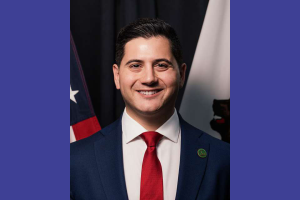
Photo – Public Domain
By: Jennifer Sanchez CBNC News
A Ninth Circuit panel on Wednesday stayed the order of U.S. District Judge J. Michael Seabright, appointed by President George W. Bush, that disqualified Bill Essayli from supervising federal prosecutions in the Central District of California, leaving President Donald Trump’s top federal prosecutor for Los Angeles and six surrounding counties in charge while the Supreme Court decides a matching case out of Nevada.
The order covers two consolidated appeals, United States v. Ramirez and United States v. Tran, which arose from prosecutions in Riverside and Santa Ana. The panel granted the government’s emergency motion in part. It froze both Seabright’s disqualification order and the appeal’s briefing schedule until 14 days after the mandate issues in United States v. Jackson, the Nevada case now pending on a petition for certiorari at the Supreme Court, or until the panel orders otherwise.
Seabright ruled on Oct. 27 that Essayli was unlawfully serving as the de facto top prosecutor in the district. He declined to dismiss the two indictments, but he barred Essayli from participating in or supervising those prosecutions, with the bar set to take effect Nov. 23. The Justice Department filed its emergency stay motion Tuesday and told the court that the reasoning behind the order could reach thousands of pending cases.
The legal question is narrow. Essayli serves as First Assistant United States Attorney and as a Special Attorney under a delegation from the Attorney General. In Jackson, the Ninth Circuit held that the Federal Vacancies Reform Act bars the Attorney General from handing one person all of the functions and powers of an acting U.S. Attorney, and on that basis it upheld the disqualification of Sigal Chattah in Nevada. The defense, led by attorney Dean Steward and the Federal Public Defender’s Office, argues that Essayli’s arrangement is the same maneuver under a different title. The government argues that his delegation is limited and that an order removing him intrudes on the executive branch’s power to enforce the law.
Judge Eric C. Tung, appointed by President Donald Trump, concurred in part and dissented in part. He agreed that a stay was warranted and found that the government is likely to win on the merits. He pointed out that Jackson expressly left open what kinds of limited delegations are lawful, and that Essayli’s delegation excludes every function that only a U.S. Attorney may perform by law, including certain appeal certifications, juvenile-transfer certifications, and requests for tax return information. Tung dissented from the decision to tie the stay’s expiration to the Supreme Court’s handling of Jackson rather than keep it in place for the full appeal.
Scorecard: Judge Richard C. Tallman, appointed by President Bill Clinton, and Judge Anthony D. Johnstone, appointed by President Joe Biden, signed the order that limits the stay so it ends with the Jackson mandate instead of lasting through the appeal.
The practical effect is immediate. Essayli remains in command of the federal prosecutor’s office for seven Southern and Central California counties, and the cases against Ramirez and Tran continue under his supervision. Federal prosecutors expect the Supreme Court to act on Jackson in early to mid-December, which means the stay could be short.
The contradiction is plain. A district judge found that Essayli lacked lawful authority yet left the indictments he supervised standing. Three appellate judges then agreed that his removal should wait. The Constitution places the enforcement of federal law in the executive branch, and the courts have now spent 16 months deciding who in that branch may sign the paperwork.