America has required that every phone, router, and camera sold inside its borders meet spectrum rules for decades. It has not required that the laboratories performing those tests operate under American oversight or reciprocal recognition. That arrangement placed more than 80 percent of equipment-authorization applications in Chinese facilities in 2025. The Federal Communications Commission voted 3-0 on October 29 to end the practice. Recognition of laboratories and certification bodies in countries that do not grant equivalent standing to U.S. labs will terminate on December 1, 2028. China has no such mutual recognition agreement. The share of testing performed inside the United States fell from roughly 31 percent in 2007 to 3.6 percent last year. The commission’s action restores a baseline condition that American devices be certified under American jurisdiction or under the jurisdiction of partners that accept American labs on equal terms.
The concentration created practical problems the agency documented. An FCC engineer told the open meeting that four Chinese laboratories had reused identical test results across different products. Earlier this year the commission withdrew recognition from SLG-CPC Test Laboratory Co. Ltd. in Dongguan after the firm admitted submitting reports containing data copied from other tests. Thirty-three separate FCC identification numbers had apparently relied on the same reports, sometimes for entirely different devices. Chairman Brendan Carr noted that laboratories gain access to confidential technical information months before products reach the market. He stated that improperly operated labs could approve insecure equipment, disrupt communications networks, or extract intellectual property. The commission had already withdrawn recognition from 32 laboratories controlled by foreign adversaries under earlier rules. Discovery that Huawei, long subject to U.S. national-security restrictions, had operated an FCC-recognized testing laboratory prompted closer examination of the broader Chinese testing base.
Manufacturers now have a two-year window to shift testing to U.S. laboratories or to laboratories in countries that maintain reciprocal agreements. During the transition the agency may still grant recognition to facilities in affected countries, but those recognitions expire automatically on the December 2028 date. Carr indicated the commission retains authority to remove additional laboratories sooner if they present the same deficiencies already identified. The agency is also seeking comment on stronger ownership checks, intellectual-property protections, and ongoing market surveillance of devices already authorized. The United States previously accepted testing from any competent laboratory worldwide on the theory that technical competence alone sufficed. That premise treated the testing step as neutral infrastructure rather than as a point of potential leverage. Reciprocity was the original framework; successive administrations allowed it to erode while Chinese capacity expanded.
American consumers and networks bear the residual exposure until the transition completes. A device that passes a laboratory the FCC cannot effectively inspect or subpoena still enters the domestic market. The same laboratories that handled the large majority of applications also sit inside a jurisdiction that has restricted reciprocal access and that has previously directed or controlled firms already placed on U.S. restricted lists. The commission’s order does not ban Chinese-made products; it requires that the verification step occur where American regulators retain practical enforcement tools. The cost of the prior arrangement was the progressive loss of domestic testing capacity and the corresponding increase in reliance on facilities the United States cannot audit in real time. The vote does not restore the 2007 share of American testing overnight. It does establish a deadline after which the verification of devices sold to American users will no longer rest predominantly on laboratories that do not operate under reciprocal obligations.
The contradiction is straightforward. America certifies the devices that connect its networks and households, yet for years it outsourced the decisive laboratory step to facilities it cannot fully oversee. The commission has now set the date on which that outsourcing ends.
Sources: https://www.theepochtimes.com/china/fcc-votes-3-0-to-ban-chinese-labs-from-testing-electronics-for-us-market-6110540 https://www.reuters.com/business/media-telecom/fcc-votes-ban-all-chinese-labs-testing-us-electronics-2026-10-29/ https://broadbandbreakfast.com/fcc-votes-to-block-chinese-labs-from-testing-u-s-equipment/
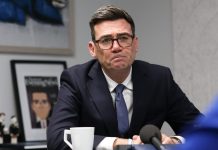
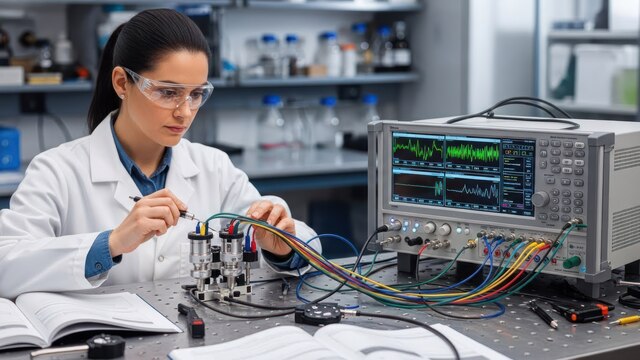
Visuals: FCC Chairman Brendan Carr speaking at an open meeting beside the commission seal; laboratory benches with smartphones under continuous test. [Getty Images of FCC seal and electronics testing labs if available]