By Zorina Grey CBNC News
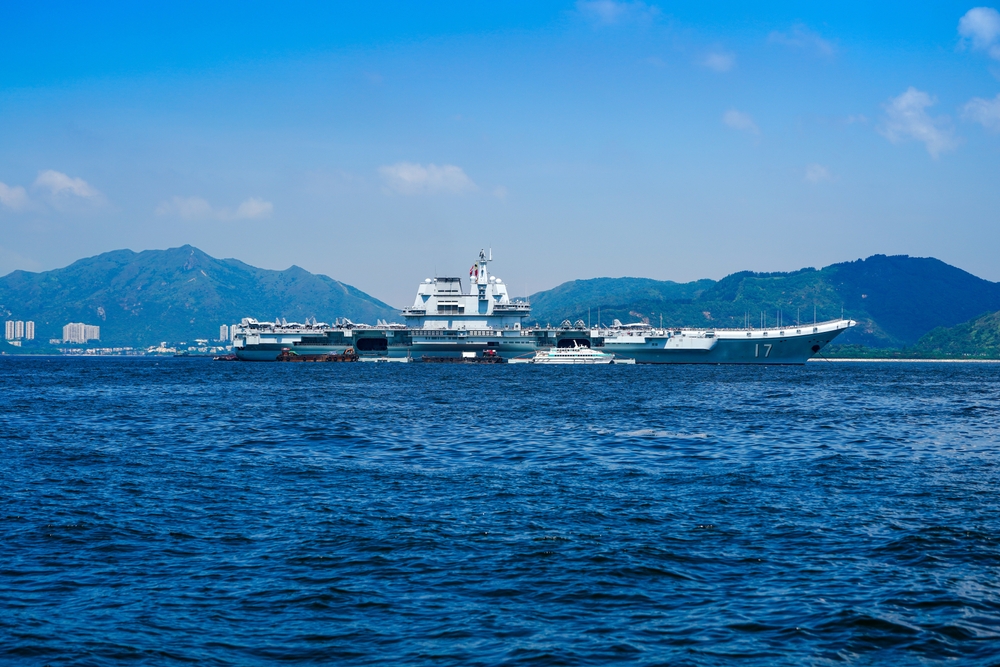
America still holds the decisive position in the Western Pacific. The United States Navy maintains the ability to operate where it chooses, and its treaty allies continue to rely on that fact. Beijing has spent the past week testing how far that position can be pressed without a direct response. Taiwanese officials reported more than fifty Chinese navy and other official vessels operating across a wide arc that runs from southern Japan past Taiwan and down toward the Philippines. Thirty-four of those vessels were warships. The aircraft carrier Liaoning and its escorts sat east of the Philippines after earlier transits that took the group through waters inside the Philippine archipelago.
The scale is not routine. Taiwan’s National Security Council described the simultaneous pressure on Taiwan, Japan, and the Philippines as obvious. Japanese forces tracked Chinese ships moving east through the Osumi Strait. Philippine monitoring placed the Liaoning group within roughly fifty nautical miles of Philippine coasts before it turned. Separately, Chinese naval and coast-guard units conducted combat-readiness patrols around Scarborough Shoal, a feature Manila has long administered and that an international tribunal has already ruled lies outside China’s lawful claims. Beijing called the patrols a necessary countermeasure to Philippine “provocative acts.” It offered no specific list of those acts.
The American cost is measured in stretched resources and rising risk. The United States has committed significant naval capacity to other theaters. Every Chinese formation that trains beyond the first island chain forces planners to weigh whether the next exercise will coincide with an American carrier group already at sea. The South China Sea carries a substantial share of global energy and commercial traffic. Any sustained Chinese effort to treat those waters as an internal lake raises insurance costs, delays shipments, and forces American companies to reroute or pay more. Allies that have already spent years building their own defenses now face a clearer requirement to keep buying American systems or accept that the balance is shifting.
China’s own statements treat the deployments as ordinary training. The same statements simultaneously describe the activity as a response to Philippine and Japanese actions and as preparation that strengthens control over claimed waters. The Liaoning has conducted carrier operations east of the first island chain more than once this year. Each cycle adds hours for Chinese aircrew and more data on how regional forces react. American officials have called earlier Chinese maritime activity off Taiwan’s east coast deeply destabilizing. The current pattern simply widens the same practice.
Philippine forces recorded a sharp rise in Chinese vessels near disputed features in September. Japanese aircraft scrambled to Chinese intelligence flights over the East China Sea in mid-October. These are not isolated events. They form a continuous campaign of presence that keeps smaller navies reacting while the larger Chinese fleet practices coordinated operations across theater-command boundaries. The United States retains the option to increase its own presence, to accelerate arms deliveries to Taiwan, or to coordinate more tightly with Japan and the Philippines. Each choice carries a price in dollars and in attention that cannot be spent elsewhere.
Beijing continues to state that it seeks a peaceful resolution while it deploys the instruments of coercion in plain sight. American strategy still assumes that the combination of naval reach and allied resolve will keep those instruments from being used. The past week’s deployments test that assumption in real time. The contradiction remains plain: China describes its naval activity as defensive and routine even as the same activity places more than fifty vessels in positions that simultaneously pressure three American partners.
Sources: https://www.reuters.com/world/china/china-conducts-combat-readiness-patrols-around-disputed-shoal-south-china-sea-2026-10-30/ https://www.reuters.com/world/china/taiwan-flags-obvious-threat-50-chinese-vessels-wide-sweep-waters-2026-10-29/ https://dailycaller.com/2026/10/26/american-chinese-aircraft-carriers-could-cross-paths/ https://www.taipeitimes.com/News/taiwan/archives/2026/10/30/2003866866