

By Zorina Grey CBNC News
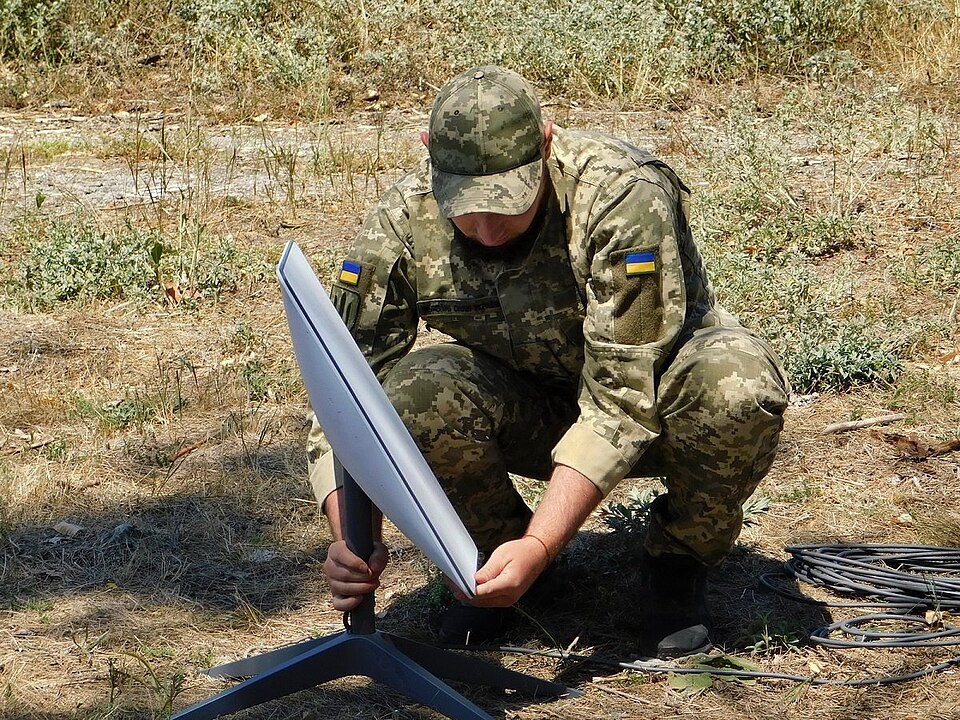
Iran kept directing its forces and its one-way attack drones against American troops in March by using an American-built satellite network after U.S. strikes knocked out its own communications, according to a classified U.S. Central Command war update described to The Washington Post. The report, delivered to the office of Defense Secretary Pete Hegseth over the summer, said Tehran used SpaceX’s Starlink service for command and control and to oversee drone operations in the opening days of the war. The Post’s account, published Saturday, cites four people familiar with the operations.
The sequence matters. American and Israeli strikes went after Iran’s conventional military communications in the first week of March. Starlink then gave Tehran another channel to reach its forces. SpaceX concluded the same week that Iran was exploiting the service, and Elon Musk was reported to be furious when he learned it. On March 1, an Iranian drone struck a U.S. facility at Port Shuaiba in Kuwait and killed six American soldiers. The Post did not establish whether Starlink played any role in that strike, and the Pentagon has not released the findings of its investigation. Within hours of the attack, SpaceX imposed identity checks on terminals moving faster than 100 miles per hour. In the following weeks, it tightened verification for buyers who went through resellers and suspended a program that let authorized vendors pass terminals to sub-resellers. Before those changes, a credit card was generally enough to get service.
The case for an open global network rests on the belief that connectivity sold to anyone, anywhere, without borders, is a neutral good that serves every user equally. That belief does not survive contact with a war. A system that hands service to any account holder with a working card does not ask whether the account holder is a dissident in Tehran or a drone cell aimed at a U.S. base. Industry executives told the Post that it is nearly impossible to keep public terminals inside Iran out of the regime’s hands. SpaceX also lacks a trusted local authority there to vouch for legitimate users, which is how it was able to cut unregistered Russian terminals in Ukraine in February. Shutting the service off nationwide would also cut off the Iranians who have used Starlink, free of charge since January, to get around the regime’s internet blackouts.
The incentives on the American side were no better aligned. During the same week, Musk was reported to be angry that the U.S. military was flying its low-cost LUCAS attack drones over Starshield, SpaceX’s military network, on a subscription priced for ground use. Reuters reported in May that SpaceX executives said the Pentagon was paying about $5,000 per terminal for service that would cost nearly $25,000 at the aviation tier. One person told the Post that at least two SpaceX executives were fired by the end of that week over the two incidents. While the American government and an American company argued over the billing tier, the adversary had signed up for service on the open market.
The strategic objective in March was to blind Iran’s command structure and protect American forces in the Gulf. The alternative left in place was a commercial back channel, built and operated by an American company, open to anyone who could pay. Pentagon press secretary Kingsley Wilson told Fortune that the department “is not aware of the report” to the secretary’s office on the subject and declined to say whether Iran used Starlink at all. A Central Command finding written for the Defense Secretary’s office is now something the Pentagon says it does not know about, and the families of the six soldiers killed at Port Shuaiba are still waiting on an investigation the Pentagon has not released.
Sources:
washingtonpost.com/national-security/2026/11/28/iran-used-elon-musks-starlink-internet-satellite-system-attack-us
fortune.com/2026/11/28/iran-spacex-starlink-drone-attacks-elon-musk-pentagon-lucas
jpost.com/middle-east/iran-news/article-916402
i24news.tv/en/news/middle-east/iran-eastern-states/artc-iran-used-starlink-to-support-attacks-on-us-forces-report