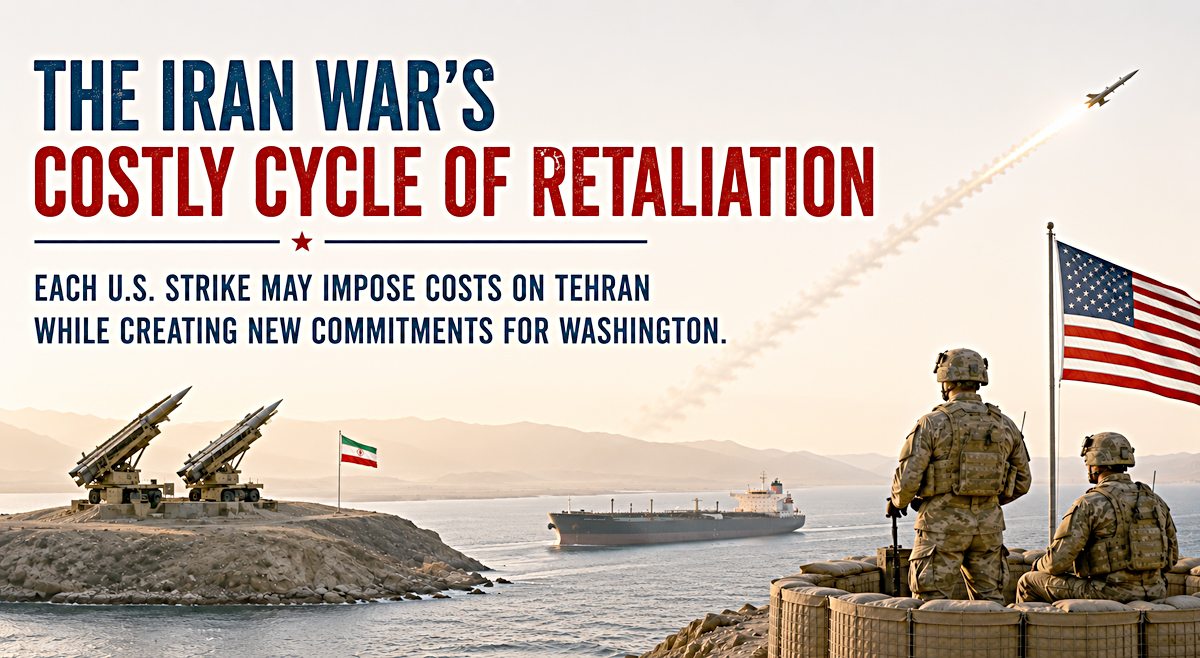
Each U.S. strike may impose costs on Tehran while creating new commitments for Washington.
On August 30, U.S. forces struck two Iranian missile launchers on Larak Island near the Strait of Hormuz, saying the systems posed a threat to shipping. Iran answered by launching ballistic missiles at U.S. forces in Jordan. The exchange revived a seemingly simple question: What is the next response supposed to change? In the war with Iran, the relationship between military action and political results is neither linear nor predictable. A strike may destroy a target while changing Tehran’s calculations and triggering costs elsewhere. For Washington, the issue is therefore not simply choosing the next target, but determining whether each action moves the United States closer to a political objective or merely creates the conditions for…