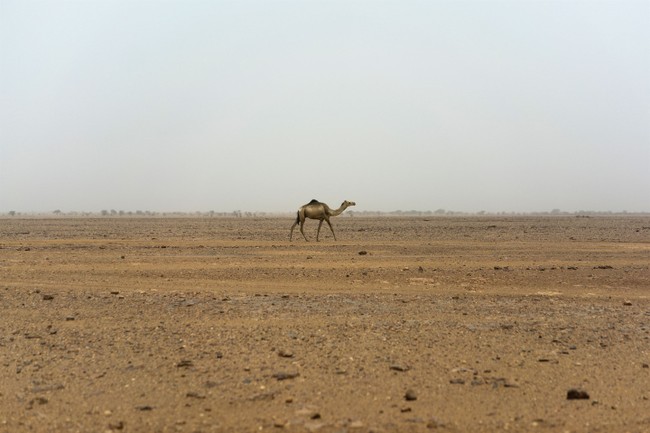
The Sahara Desert, which covers pretty much all of North Africa, is the world’s largest desert, and one of the most desolate places on the planet. But it wasn’t always like that. As recently as the Oligocene, the Sahara was a wet, green place, with swamps and rivers, bordering the ancient Tethys seaway. More recently than that, the Sahara was a grassland. But after the Tethys was closed, the Sahara grew increasingly drier, becoming at last the bleak, hostile landscape it is now. The advance of the glaciations, starting about 34 million years ago, saw a cycle we are still in today, in which mile-thick ice sheets advance and recede, in geological time, like window blinds. All of that combined to make the Sahara a desert.
That may be changing, and it’s thanks to that substance that climate scolds are constantly badgering us about: Carbon dioxide, or CO2. New satellite imagery is…