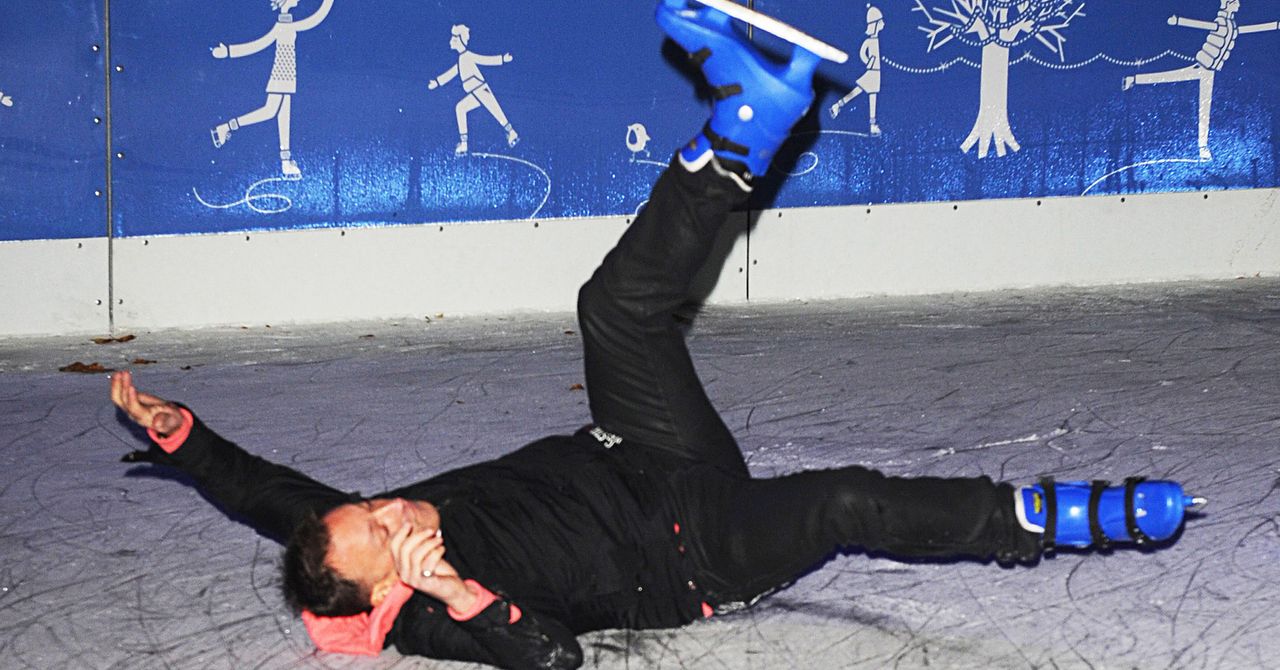
They intuited that molecules near the surface behave differently from those deep within the ice. Ice is a crystal, which means each water molecule is locked into a periodic lattice. However, at the surface, the water molecules have fewer neighbors to bond with and therefore have more freedom of movement than in solid ice. In that so-called premelted layer, molecules are easily displaced by a skate, a ski or a shoe.
Today, scientists generally agree that the premelted layer exists, at least close to the melting point, but they disagree on its role in ice’s slipperiness.
A few years ago, Luis MacDowell, a physicist at the Complutense University of Madrid, and his collaborators ran a series of simulations to establish which of the three hypotheses—pressure, friction or premelting—best explains the slipperiness of ice. “In computer simulations, you can see the atoms move,” he…