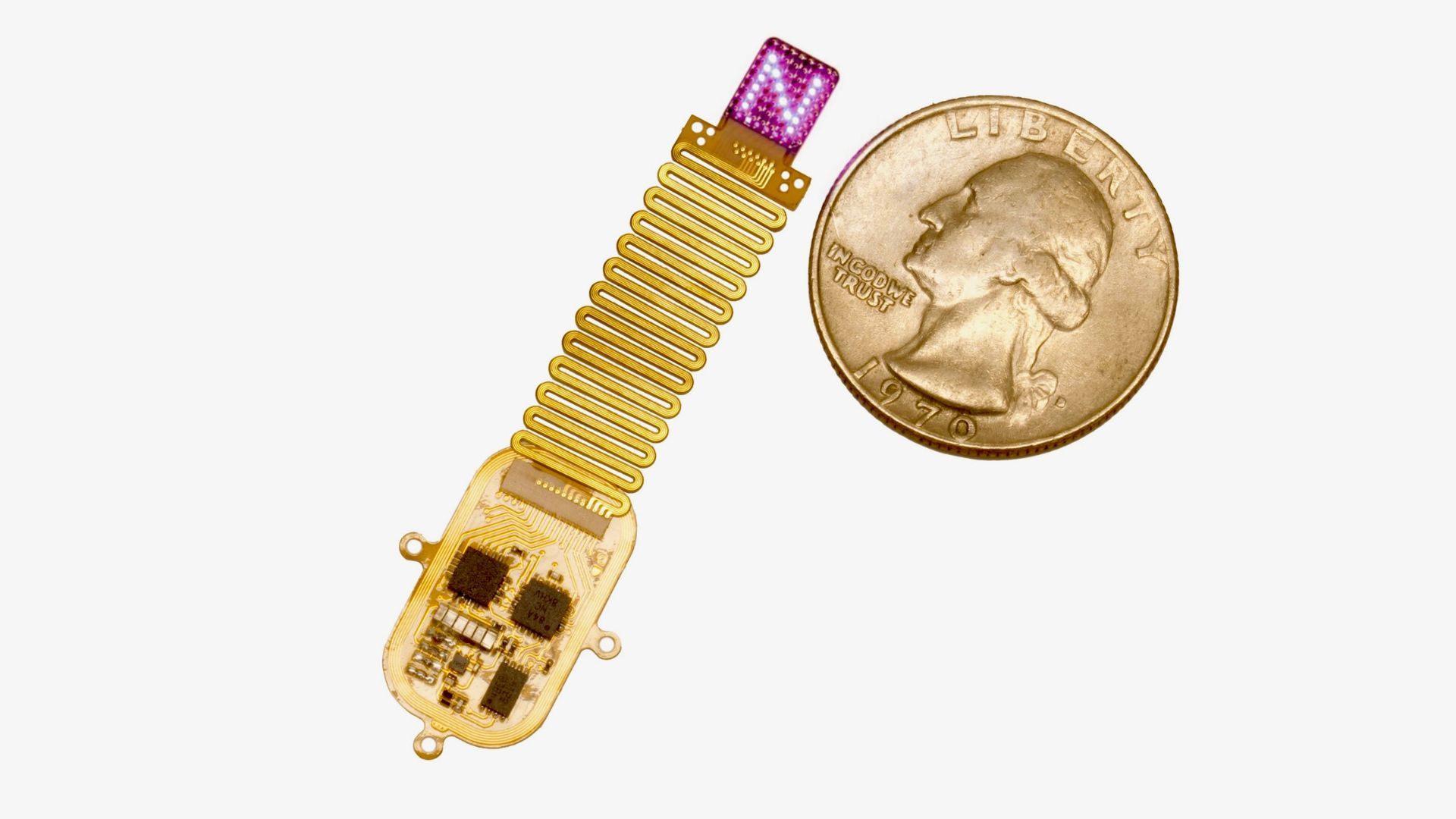
A new brain-machine interface (BMI) uses light to “speak” to the brain, mouse experiments show.
The minimally invasive wireless device, which is placed under the scalp, receives inputs in the form of light patterns, which are then conveyed to genetically modified neurons in brain tissue.
In the new study, these neurons activated as if they were responding to sensory information from the mice’s eyes. The mice learned to match these different patterns of brain activity to perform specific tasks — namely, to uncover the locations of tasty snacks in a series of lab experiments.
The device marks a step toward a new generation of BMIs that will be capable of receiving artificial inputs — in this case, LED light — independent of typical sensory channels the brain relies on, such as the eyes. This would help…