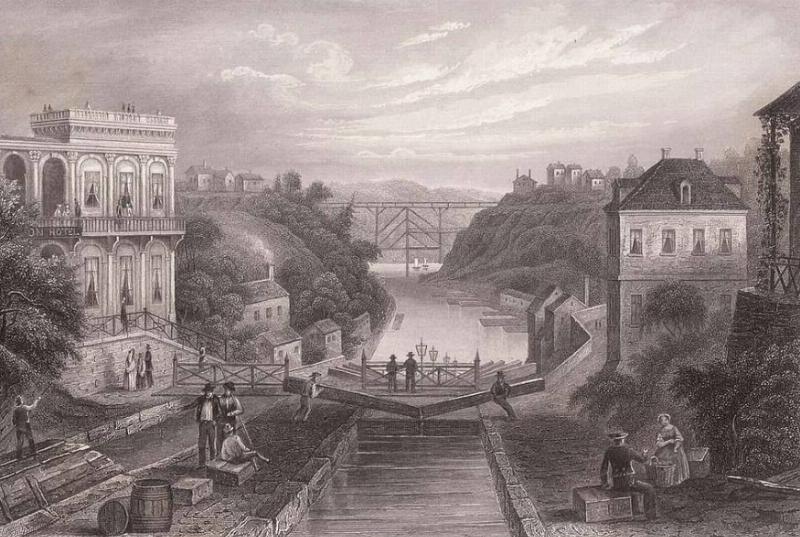
This year, the Erie Canal turns 200 years old. It is a symbol of American ingenuity and fortitude. In the early 19th century, the United States suffered from an almost nonexistent transportation infrastructure. The roads that did exist became impassable whenever it rained, with carriage wheels buried axle deep. When the roads dried, they were deeply rutted and uneven. Moving goods by wagon was very expensive because the amount that could be carried was limited. As a result, rivers and waterways were the most economical means to transport goods and materials. Cities and industry sprang up next to rivers, lakes, and the ocean. One problem with waterways was they didn’t always go where they were needed. For example, a farmer in central New York, who produced large amounts of corn found it very expensive to move his corn to market, one wagonload at a time. Or consider the Great…