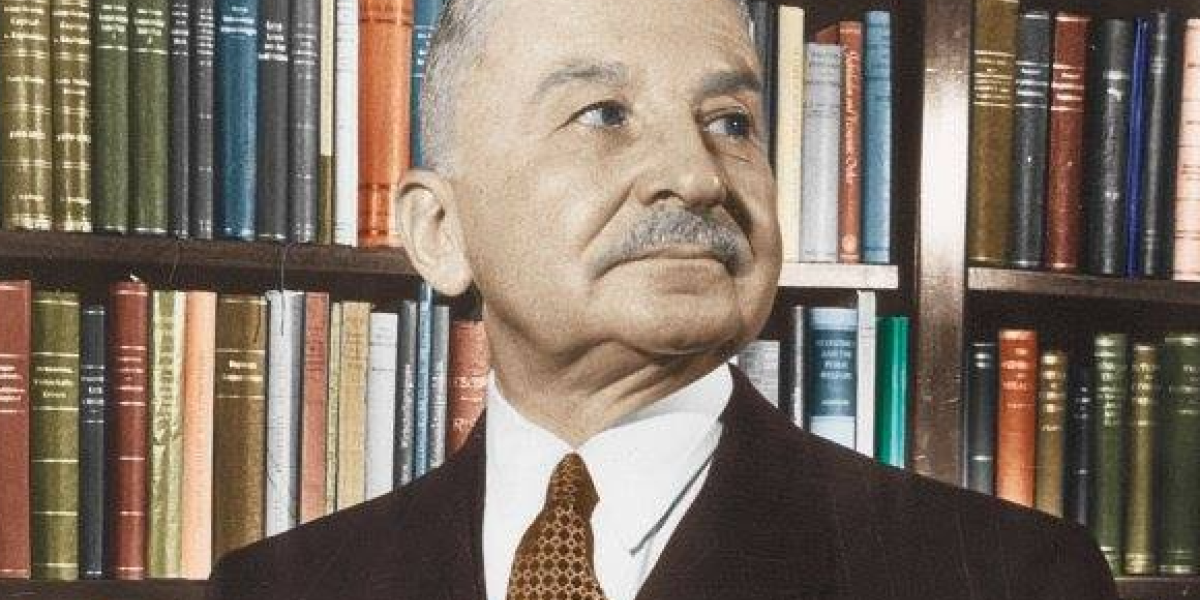
On September 29, 1881, Ludwig von Mises was born in Lemberg, then part of the Austro‑Hungarian Empire. He would become one of the twentieth century’s most important economists and the acknowledged leader of the Austrian School. Mises’s writings spanned monetary theory, business cycles, government policy, philosophy, and political economy, yet they were unified by a methodological insight—economics is not a branch of applied mathematics or a descriptive assemblage of statistics, but a logical science of purposeful human action. As he put it,
Praxeology is a theoretical and systematic, not a historical, science. Its scope is human action as such, irrespective of all environmental, accidental, and individual circumstances of the concrete acts.
His legacy—praxeology, the Austrian theory of money, the demonstration of socialism’s economic impossibility, and the defense of…