By: Jordan Joseph
Scientists can pull plastic particles out of seawater with relative ease, but finding and tracking them in human body tissue is far more complex.
A new expert review lays out how labs can detect plastic particles in blood, lungs, placentas, and other tissues – and why measurement choices will shape what health risks they reveal.
08-17-2025
Detecting and measuring the amount of plastic particles in human bodies

Earth.com staff writer
Scientists can pull plastic particles out of seawater with relative ease, but finding and tracking them in human body tissue is far more complex.
A new expert review lays out how labs can detect plastic particles in blood, lungs, placentas, and other tissues – and why measurement choices will shape what health risks they reveal.

The authors dissect a fast-moving literature to show where current methods succeed, where they fail, and what must improve.
They highlight the importance of sample preparation, standardized reporting, and clear metrics so that studies can be compared and results trusted.
At the center is a simple but daunting question: How do you measure plastic inside living systems without distorting the evidence?
Plastic particles in human tissue
“Every biological sample represents a different matrix,” said Baoshan Xing, professor of Environmental and Soil Chemistry at the University of Massachusetts (UMass) and lead study author.
That simple point drives the lab playbook. Fatty tissues, protein-rich organs, shells, and plant fibers need tailored digestion steps, from alkaline solutions to enzymes. These steps allow researchers separate plastics without melting or morphing them.
Researchers use the term microplastics for solid plastic particles roughly one micrometer to five millimeters in size. It’s a range now common in U.S. government and research guidance.
Nanoplastics typically refer to particles smaller than one micrometer, often defined by colloidal behavior in the one to 1,000 nanometer range.
What early health signals show
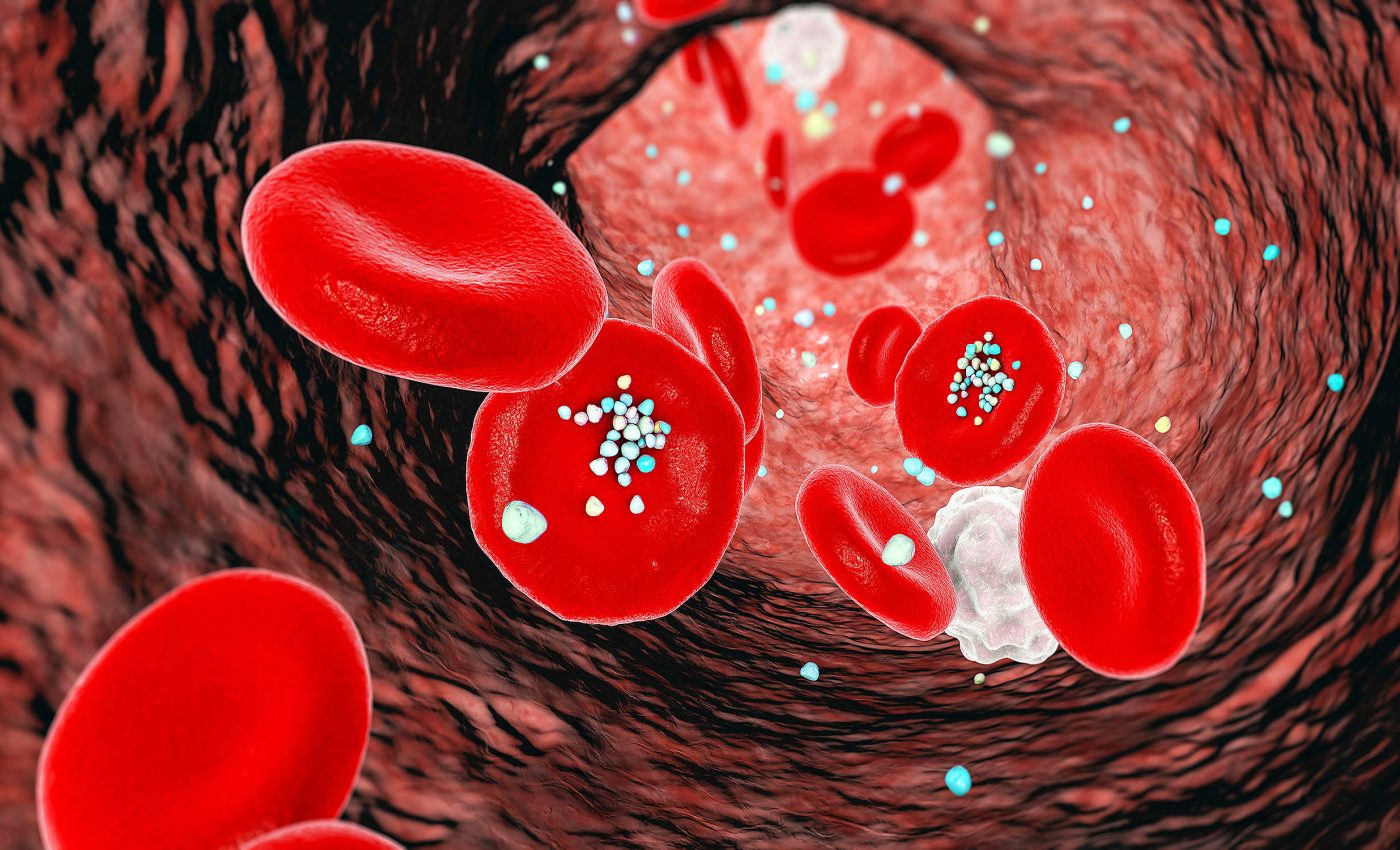
Researchers have measured microplastics in human blood, showing that polymer fragments can circulate systemically. They detected measurable mass concentrations using pyrolysis GC/MS.
Follow-up work has begun to profile sizes, shapes, and polymer types in blood from healthy volunteers to probe possible links with physiology.
Scientists have found plastic particles in human placentas on both the mother’s and baby’s sides. This raises concerns about exposure before birth, which cannot be answered without better, standardized tests.
Human lung tissue examined after surgery has contained identifiable microplastics. Micro-FTIR revealed polymer types and reported concentrations per gram of tissue under stringent blank controls.
Vascular studies have reported microplastics and nanoplastics in carotid artery plaques and associated those findings with higher risks of heart attack, stroke, or death over follow-up periods in clinical cohorts.