
By Zorina Grey CBNC News
U.S. Central Command holds the Strait of Hormuz, enforces the blockade of Iranian ports, and has told Tehran in plain terms that Iran no longer has a navy. Iran’s answer on Saturday came from Farhad Fattahi, deputy operations chief of Iran’s navy, who told Iranian state television that his forces had drawn up plans to break the American blockade and were waiting only for the order to carry them out. Fattahi also declared that the strait is closed to Iran’s enemies and that only certain countries may pass, and only in coordination with the Revolutionary Guards’ navy.
Fattahi spoke hours after a string of claims from his commander, Navy chief Amir Shahram Irani, carried by the state-linked Tasnim news agency. Irani said the United States had stolen two Iranian tankers and that Iranian commandos had taken them back while the American guards on board were asleep. He said Iranian forces struck the aircraft carrier USS Abraham Lincoln on the first day of the war, February 28. He also said Washington charges ships millions of dollars to transit Hormuz, a figure Gulf News reported as $2.5 million per vessel.
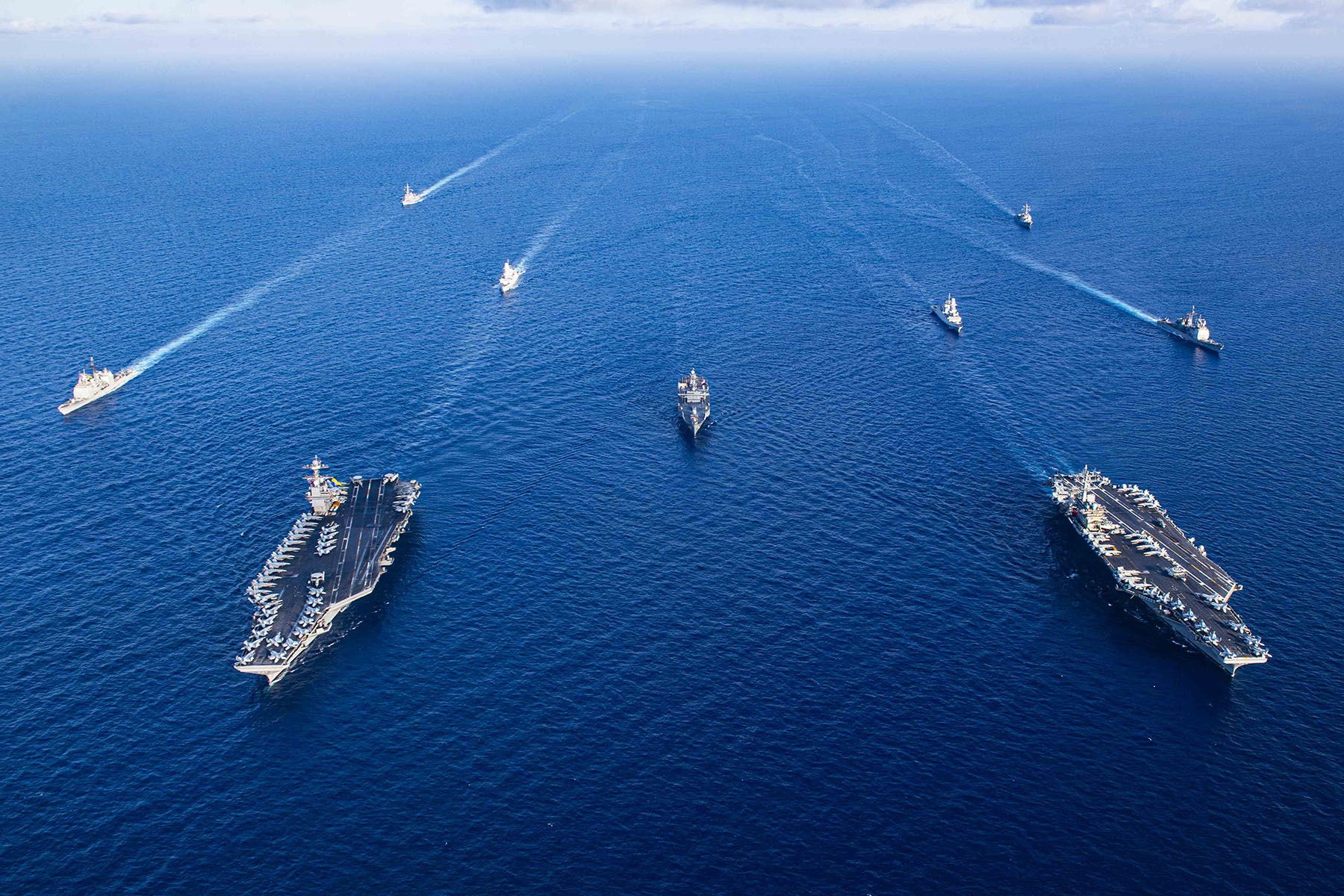
CENTCOM rejected each claim in a public post Friday afternoon, Pacific time. The command called the tanker account a fabricated lie and said Iran no longer has a navy. It said the Abraham Lincoln Carrier Strike Group was well defended, was never struck, completed a historically successful combat deployment, and returned safely to the United States last month. It said that while U.S. forces and regional partners control the strait, no toll is charged, and that thousands of ships and billions of barrels of crude have passed under American protection.
The record behind that statement is specific. The blockade has been in force since mid-July, after a short-lived agreement with Tehran collapsed. American forces have disabled six ships and redirected 158 others. On Thursday, a U.S. aircraft struck the stern of the Palau-flagged Pacific Archer with precision munitions after it left Bandar Abbas and tried to run the line in the Gulf of Oman. The ship lost propulsion, and its civilian crew was unharmed. A third carrier, the USS Theodore Roosevelt, joined the theater last week.
The claim Tehran is now advancing is that Hormuz belongs to a managed regional order in which the Revolutionary Guards decide which nations may pass and on what terms. That claim fails first on capacity. A navy that cannot prevent the disabling of six blockade runners, and cannot escort a single one of 164 turned-back or stopped vessels to open water, does not control a waterway. It issues statements about one.
The claim also fails on incentives. Iran has said Hormuz could reopen within two days if Washington lifts the blockade. That offer shows the closure is a bargaining chip, not a defense of sovereignty. Tehran is withholding passage from the world’s tankers in order to restore its own oil revenue, and it is asking other nations to accept that price.
The American objective is plain. The blockade is designed to cut off the revenue that funds Iran’s war effort and to force terms without a ground campaign. The alternative left in place is negotiation, which Tehran has refused except on the condition that the pressure be removed first. Tehran-backed Houthi forces kept up their own campaign on Saturday, and the Saudi-led coalition said it destroyed two Houthi ballistic missiles fired toward southern Saudi Arabia. Separately, the United Kingdom Maritime Trade Operations center reported that armed men boarded a cargo ship about 64 nautical miles southwest of Balhaf, Yemen, though no group has claimed responsibility. Brent crude still gained about 3 percent this week.
The plain contradiction is that Iran’s navy says it is awaiting orders to break a blockade that it has not slowed once in four months, while the waterway it claims to close remains open to every ship that does not sail for Bandar Abbas.
Sources:
cnbc.com/2026/11/28/centcom-iran-abraham-lincoln-hormuz-tanker-claims.html
iranintl.com/en/202611282175
gulfnews.com/world/mena/us-iran-tensions-centcom-rejects-iranian-military-commanders-claims-over-naval-operations-1.500763812
euronews.com/2026/11/28/us-military-fires-at-a-ship-that-violated-blockade-of-iranian-ports
x.com/CENTCOM/status/2126467565253779814