

Zorina Grey CBNC News
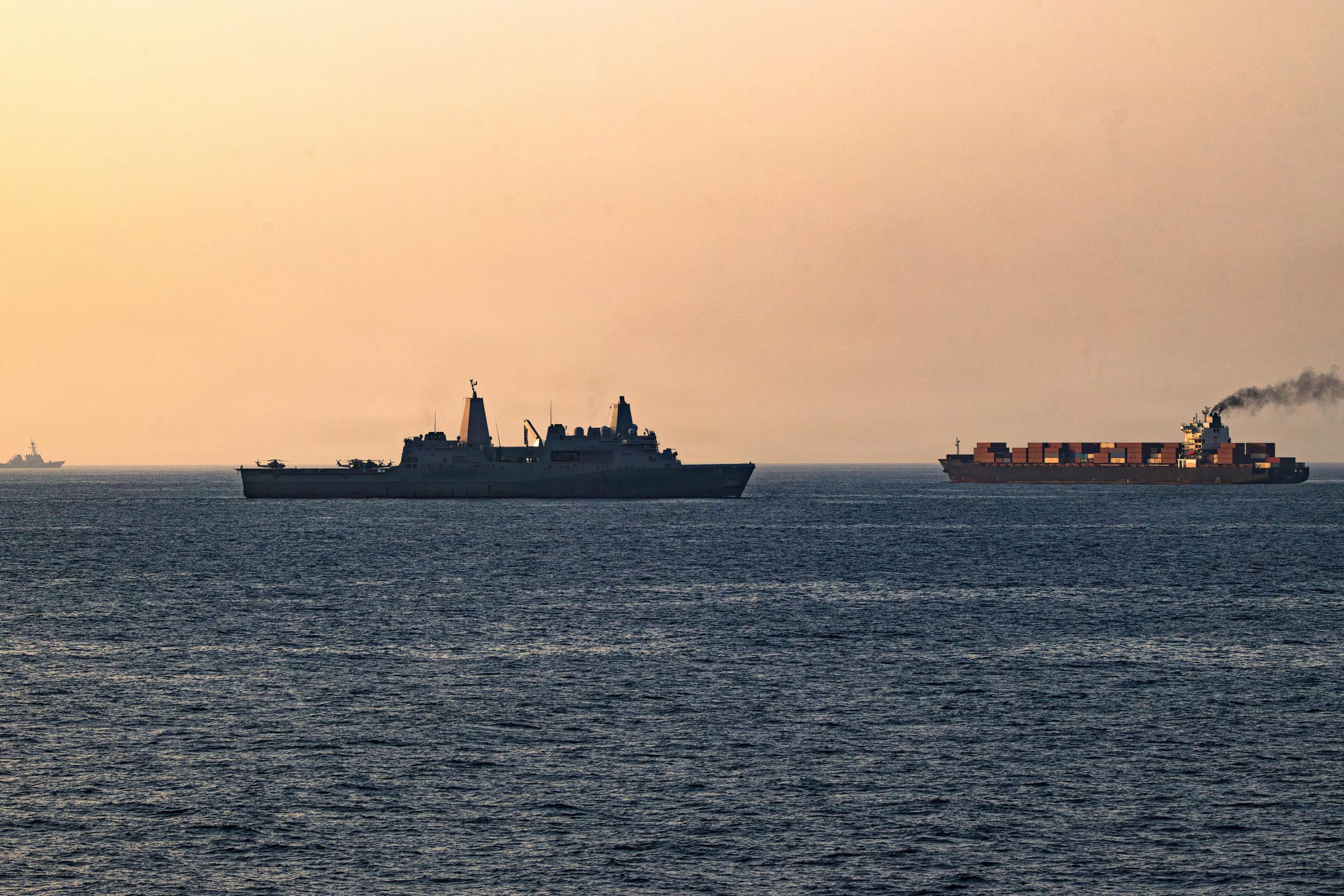
A ship that left Iran and ignored American warnings did not reach the open ocean. U.S. Central Command announced Friday that one of its aircraft fired precision munitions into the stern of the Palau-flagged bulk carrier M/V Pacific Archer in the Gulf of Oman on Thursday, Thanksgiving Day, after the crew tried to run the U.S. naval blockade of Iranian ports. The strike knocked out the vessel’s propulsion. CENTCOM said the civilian crew was unharmed.
The Pacific Archer had sailed from Bandar Abbas, Iran’s principal port on the Strait of Hormuz, and ship-tracking services listed Singapore as its destination. CENTCOM said the crew received multiple warnings before the aircraft fired. The command released a short unclassified video showing a munition striking the ship’s stern, the section that houses the engine and steering, rather than the cargo holds or crew quarters.
The numbers explain the method. CENTCOM said U.S. forces have redirected 158 commercial vessels that complied with blockade orders and disabled six that refused. The ratio is the point. Nearly every master who receives the warning turns around, and the rare ship that runs is stopped without loss of life. The command urged all mariners in the Gulf of Oman and the approaches to the Strait of Hormuz to heed its warnings.
The strategic objective has not changed since American forces resumed the blockade in mid-July. Washington intends to cut the Islamic Revolutionary Guard Corps off from the seaborne oil revenue that pays for its missiles, drones, and proxy forces. CENTCOM commander Adm. Brad Cooper said in October that the blockade had already denied Iran roughly $25 billion in oil revenue, and that apart from humanitarian shipments Iran had no imports or exports by sea. The alternative left in place is the one President Donald Trump repeated this week: Tehran can make a deal. On Thanksgiving, Trump said the United States was giving Iran every chance to do so.
The timing is not accidental. Iranian lawmakers spent the past week boasting about a challenge to the blockade. Vahid Ahmadi, a member of the Iranian parliament’s National Security Committee, said Saturday that Iran was preparing 14 oil tankers to break it and threatened retaliation against regional oil facilities. Trump answered Sunday that Iranian vessels trying to breach the blockade would be sunk. Iran’s Foreign Ministry then retreated and called the tanker reports media speculation. Four days later, a carrier out of Bandar Abbas tested the line and lost its engines.
The standard objection from the international institutional class is that a unilateral blockade is an escalation that only the United Nations or a multilateral coalition can legitimately authorize, and that enforcement endangers innocent mariners. That claim fails against the record. The multilateral approach produced years of sanctions waivers, unenforced resolutions, and a regime that kept selling oil and arming proxies. The American blockade has produced 158 voluntary course changes, six disabled ships, and no reported crew deaths. It is precise because it targets propulsion, and it works because the warning carries a consequence that ship owners and insurers believe.
The incentive structure now favors compliance. A ship owner who runs the blockade risks his vessel, his cargo, and his insurance coverage. A ship owner who turns around loses a voyage. Tehran can threaten to send tankers, but it cannot compel private crews to sail into a line that the United States has shown it will enforce.
The plain contradiction belongs to Tehran. The regime that promised 14 tankers to break the American blockade watched one bulk carrier try and fail, while it still turns down the deal that would end the blockade.
Sources:
- https://www.dvidshub.net/news/580348/us-forces-disable-commercial-vessel-during-blockade-enforcement-against-iran
- https://apnews.com/article/iran-naval-blockade-us-military-disabled-ship-800620518a351282f098faa9381b3375
- https://thehill.com/policy/defense/6245428-us-naval-blockade-iran-ship-disabled/
- https://www.iranintl.com/en/202611270589
- https://www.breitbart.com/politics/2026/11/26/trump-u-s-troops-victory-iran-hand/