
By Zorina Grey CBNC News
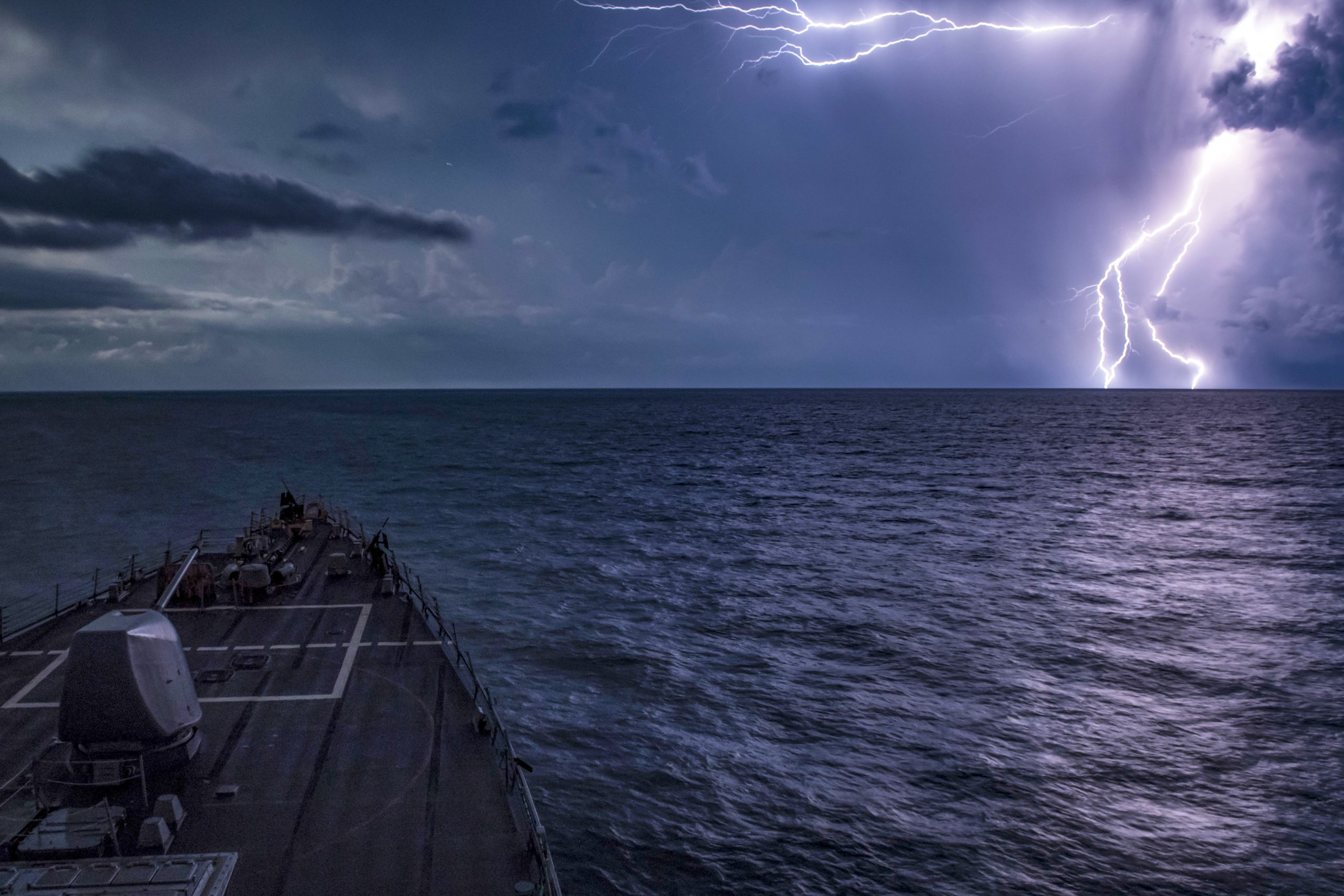
The American naval blockade of Iran’s Persian Gulf and Gulf of Oman ports is still the one instrument Tehran feels, and on Thursday the regime answered it by sending drones into Kuwait, where falling debris killed two Italian technicians who were servicing the emirate’s air defenses. Kuwait’s Ministry of Defence said several hostile drones entered the country’s airspace and were engaged by its forces before they reached what it called a vital facility. Shrapnel from the interceptions injured four people, two Italians, one Kuwaiti and one Pakistani, and both Italians later died of their wounds.
Italy’s foreign ministry identified the dead as civilian employees of Rheinmetall Italia, the Italian arm of the German defense group. The two men were maintaining the detection antennas of the Skyguard air-defense system that the Kuwaiti Armed Forces operate. Foreign Minister Antonio Tajani told the Italian Senate that drones of Iranian origin struck Kuwaiti military installations at about 2:00 PM local time, including the air-defense detection station where the technicians were working, and that a powerful explosion followed. Prime Minister Giorgia Meloni received the news while attending the European Council in Brussels and issued condolences to the families.
The disruption extended beyond the target. Commercial flights on the corridor that crosses Iraq toward the Gulf were turned south on Thursday afternoon as Kuwaiti airspace was reported closed. On the same day, the navy of Iran’s Islamic Revolutionary Guard Corps claimed that two oil tankers struck sea mines north of the Omani port of Khasab, one of them a supertanker loaded with more than two million barrels of crude. The Guards said both ships had switched off their navigation systems and were relying on American fighter jets for cover. Independent maritime reporting described projectile strikes near tankers in the area rather than confirmed mine hits, and the IRGC claim should be read as the boast it is.
The collectivist claim is that the memorandum of understanding Washington and Tehran signed in June, together with patient multilateral diplomacy, is the path that restrains Iran. That claim fails against the regime’s own incentives. The memorandum was meant to close the war that began in February with joint American and Israeli strikes, yet talks have stalled, and Tehran continues to launch drones at Gulf states and to advertise attacks on shipping in the Strait of Hormuz. Paper has not changed Iranian behavior. Cost has. The rial has fallen past 2.8 million to the dollar on the open market, and Iranian truck drivers entered a fifth day of strikes on Thursday in 18 cities, protesting diesel shortages and freight rates that no longer cover the cost of running a truck. Those pressures come from the blockade and the war damage, not from a signing ceremony.
The American objective is narrow and defensible. It is a Strait of Hormuz that stays open to commerce and an Iranian regime that lacks the money to rebuild its missile and drone arsenal, achieved without a new ground commitment. The blockade serves that objective at sea, from a distance, on American terms. The alternative left in place by any premature easing would be a regime that keeps its drone program, keeps its claim over the strait, and collects the revenue to finance both.
Thursday’s attack also shows where the burden should sit. Kuwait’s own forces intercepted the drones. A European company was maintaining the radar that guides those defenses. The Gulf states and Europe have the most direct exposure to Iranian drones and to Hormuz oil flows, and they have the capacity to carry more of the air-defense load themselves rather than waiting for Washington to do it.
The contradiction is plain. European leaders met in Brussels on Thursday to bridge their differences over a budget and another large loan for Ukraine, while Iranian drones killed two European citizens on a Gulf air-defense site, and the only pressure on Tehran that is working remains a blockade enforced by the United States Navy.