
By: Zorina Grey CBNC News
The United States entered Thanksgiving with 418.9 million barrels of crude in storage, according to federal data released Wednesday, on the same day that Yemen’s Iran-aligned Houthis claimed a drone strike on Saudi Arabia’s Ras Tanura refinery and pushed the world oil price higher on a single statement.
Houthi military spokesman Yahya Saree said the attack was accurate and direct and that it set fires at the site. The Saudi-led coalition said its air defenses destroyed four drones over Ras Tanura in the Eastern Province and that falling fragments caused no injuries in an initial assessment. The coalition did not say the refinery was hit. Satellite imagery from NASA and Planet Labs reviewed by Reuters showed thick black smoke over the installation. Saree also claimed a three-phase attack on the King Abdullah Financial District in Riyadh, where a strike on the Public Investment Fund tower wounded 11 people on Tuesday.
Ras Tanura is the kingdom’s largest and oldest refinery. It processes 550,000 barrels per day, about 16 percent of Saudi refining capacity, and it sits beside a terminal that can load roughly 6.5 million barrels of crude per day. That crude moves mainly to Asian buyers, including China, Japan, South Korea, and India. The complex has been hit repeatedly since the U.S.-Iran war began on Feb. 28. Iranian drones forced Aramco to shut the refinery after a March 2 attack, terminal loadings did not resume until late June, and the Houthis claimed a ballistic missile strike on the complex on Oct. 27.
Markets answered within hours. Brent crude closed up 3.5 percent at $94.61 a barrel. West Texas Intermediate, the American benchmark, rose 2 percent to settle at $83.68. The gap between those two numbers is the clearest measure of where the exposure actually sits. The Energy Information Administration reported that U.S. crude inventories rose by 1.1 million barrels in the week ended Nov. 20.
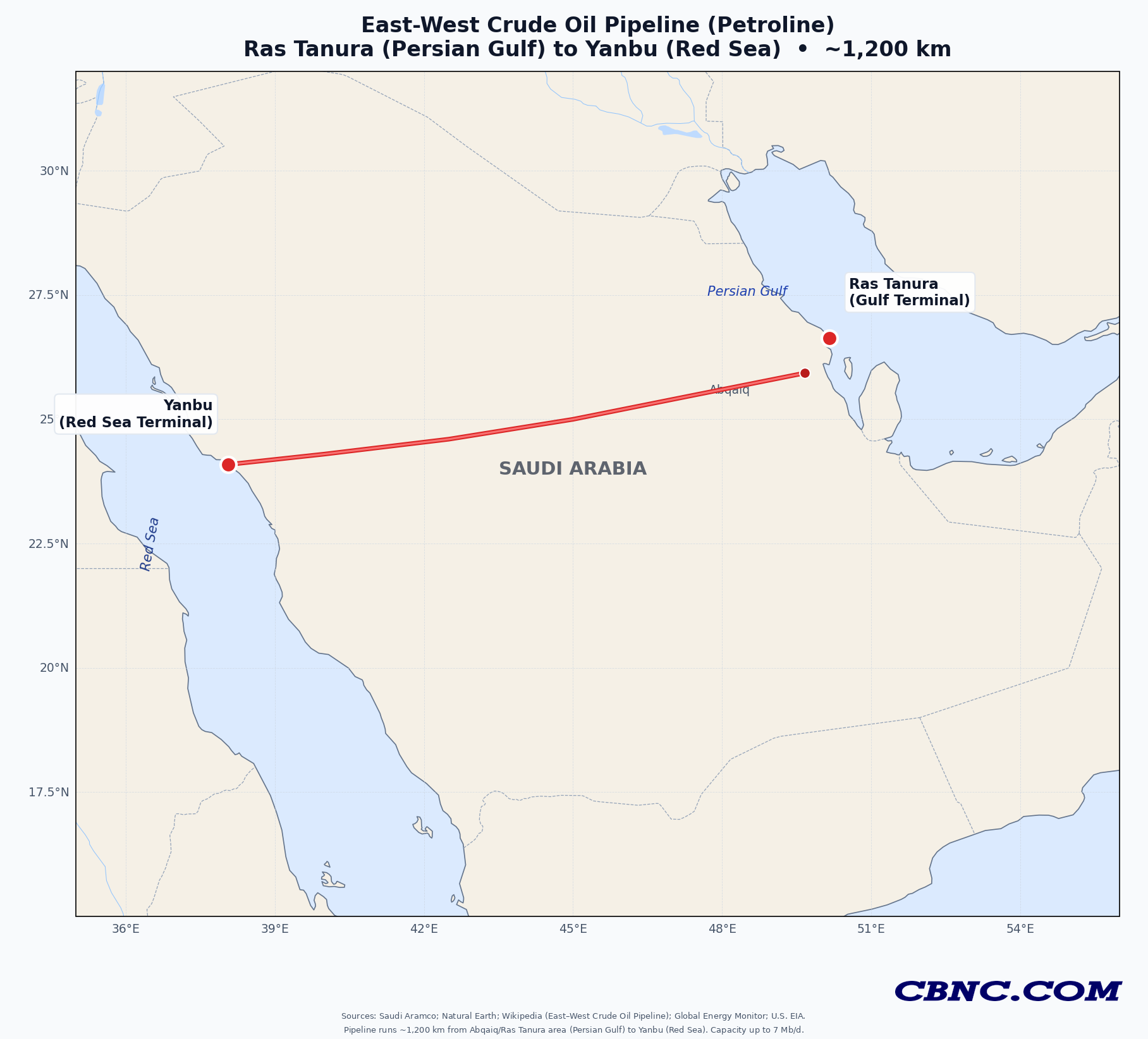
The collectivist claim is that every attack on a Gulf refinery is an American emergency that obligates Washington to guarantee the energy security of the region and of the countries that buy its oil. That claim fails against the record of this week. The barrels at risk at Ras Tanura are bound chiefly for Asian buyers, and China, America’s largest commercial rival, is among them. Saudi Arabia operates its own air defenses, and it intercepted the drones on its own. Riyadh has also already moved more of its export volume to Yanbu on the Red Sea, which is fed by the East-West pipeline, since the war began.
The strategic objective for the United States in this war has been to deny Iran leverage over the oil market, and the administration has pursued that objective through its blockade, not through a pledge to defend every Saudi facility. The alternative left in place is a Gulf system in which the producers defend their own infrastructure and the buyers absorb the risk premium on the barrels they purchase. President Donald Trump has credited the blockade with lowering gasoline prices heading into the holiday.
The contradiction is plain. The Houthis aimed at a Saudi refinery whose crude sails to Asia, and the American benchmark moved less than the global one because the United States holds its own supply at home. The cost to Americans arrives only when Washington agrees to treat another country’s infrastructure as its own obligation.
Sources
- nbcnews.com/world/saudi-arabia/yemen-houthi-rebels-attack-saudi-arabia-largest-oil-refinery-rcna611319
- cnbc.com/2026/11/25/oil-wti-brent-hormuz-middle-east.html
- oilprice.com/Latest-Energy-News/World-News/Oil-Jumps-Over-2-as-Saudi-Arabia-Downs-Drones-Over-Ras-Tanura.html
- thenationalnews.com/news/gulf/2026/11/25/yemens-houthis-say-they-attacked-saudi-arabias-ras-tanura-refinery
- thegatewaypundit.com/2026/11/iran-backed-houthis-hit-riyadhs-tallest-tower-then
- justthenews.com/government/white-house/trump-serves-cheaper-gas-thanksgiving-crediting-his-iran-blockade