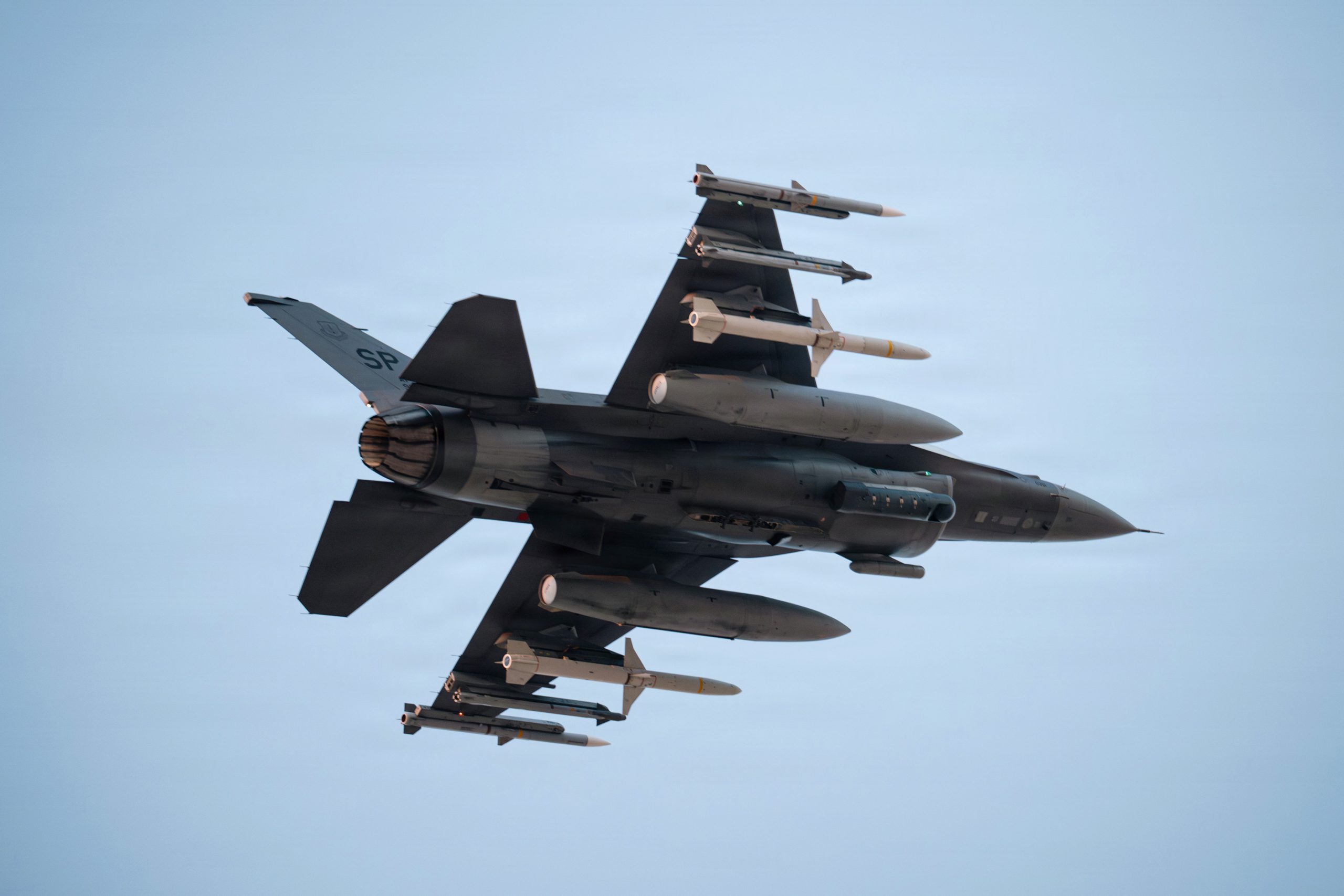
Photo – Air Force war.gov
By Zorina Grey CBNC News
U.S. Central Command flatly rejected Iran’s claim on Saturday that its air defenses had damaged an American F-16 over the Gulf, and the rebuttal arrived on the same morning that tankers leaving the Strait of Hormuz were struck by projectiles, which shows a regime that is losing the oil war and is trying to win the narrative instead. CENTCOM labeled the Islamic Revolutionary Guard Corps account false on X and stated that Iran did not attack an American F-16 at all. The command added that every U.S. fighter jet in the Middle East is safe and accounted for.
The Iranian story was specific by design. Tehran’s military said a missile hit an American fighter on Friday evening, damaged the aircraft, and forced it to make an emergency landing. No wreckage, no imagery, and no corroborating evidence came with the claim. The purpose of such a claim is not military. It is meant for a domestic audience that has watched its government’s oil revenue disappear for more than four months.
That revenue loss is the strategic fact behind Saturday’s noise. CENTCOM marked the 130th consecutive day of the American blockade of Iranian ports on Saturday and stated that U.S. service members are preventing the IRGC from exporting billions of dollars in crude oil. The objective is plain and limited: deny the Iranian regime the money that funds its missiles, its drones, and its proxies, without committing American ground forces to a war inside Iran.
Tehran’s answer has been to make the strait dangerous for everyone else. The United Kingdom Maritime Trade Operations center reported that an outbound tanker was hit in the stern by an unknown projectile about 11 nautical miles north of Khasab, Oman, early Saturday. Less than an hour later, it reported a second tanker hit in the engine room about 17 nautical miles east of the same port. No casualties were reported. Iran’s navy separately said a tanker caught fire after striking a naval mine in a restricted zone east of the strait, and it accused the ship of sailing with its identification equipment switched off. Iranian state television also aired footage of a new underground launcher that the IRGC said can fire two liquid-fueled missiles at once, a display aimed squarely at Washington’s statements that the missile program has been destroyed.
The collectivist claim that follows every incident of this kind is that the United States owes the world a guaranteed open strait, and that American sailors must escort every cargo to every buyer. That claim fails on incentives and on interest. The United States is a net petroleum exporter, and Gulf crude is not the foundation of the American economy. The largest buyers of oil moving through Hormuz are in Asia and Europe, and those governments have navies, budgets, and far more at stake in that water than Washington does. A standing American guarantee would remove any reason for them to carry their own burden.
Iran’s own conduct also undercuts the premise that Tehran is negotiating in good faith. Foreign Minister Abbas Araqchi has said Iran still hopes diplomacy can end the war, while President Donald Trump has called Tehran’s terms unacceptable. A government that wants a settlement does not mine a shipping lane and invent a downed fighter on the same weekend. Those actions are pressure tactics, and they confirm that the blockade is biting where it was designed to bite.
The alternative left in place is restraint with leverage. The blockade holds, American aircraft fly without loss, and the regime is reduced to staging launcher videos and issuing claims that collapse within hours. Washington does not need to answer every Iranian provocation with a wider war. It needs to keep the pressure on the regime’s treasury and insist that the nations buying Gulf oil protect their own tankers.
The contradiction is now on the record. Iran says it controls the Strait of Hormuz, yet it cannot sell its own oil through it, and it cannot produce evidence for the one American loss it claims to have inflicted. The cost of the strait’s disorder belongs first to the countries that depend on it, and American policy should keep it there.
Sources:
x.com/CENTCOM/status/2124152057787482170
x.com/CENTCOM/status/2124122069528879528
ukmto.org/-/media/ukmto/products/20261121-ukmto_warning_215-26.pdf
reuters.com/3fec1b0a85a0/business/aerospace-defense/us-denies-iranian-account-that-missile-damaged-f-16-over-gulf-2026-11-21
aljazeera.com/news/2026/11/21/tankers-hit-in-strait-of-hormuz-as-iran-tightens-grip-on-shipping
cnbc.com/2026/11/21/two-tanker-attacks-reported-near-omans-khasab-ukmto-says.html
apnews.com/article/mideast-iran-gaza-israel-november-21-2026-29159a6f3365ff447c0ccbd1d7260f75