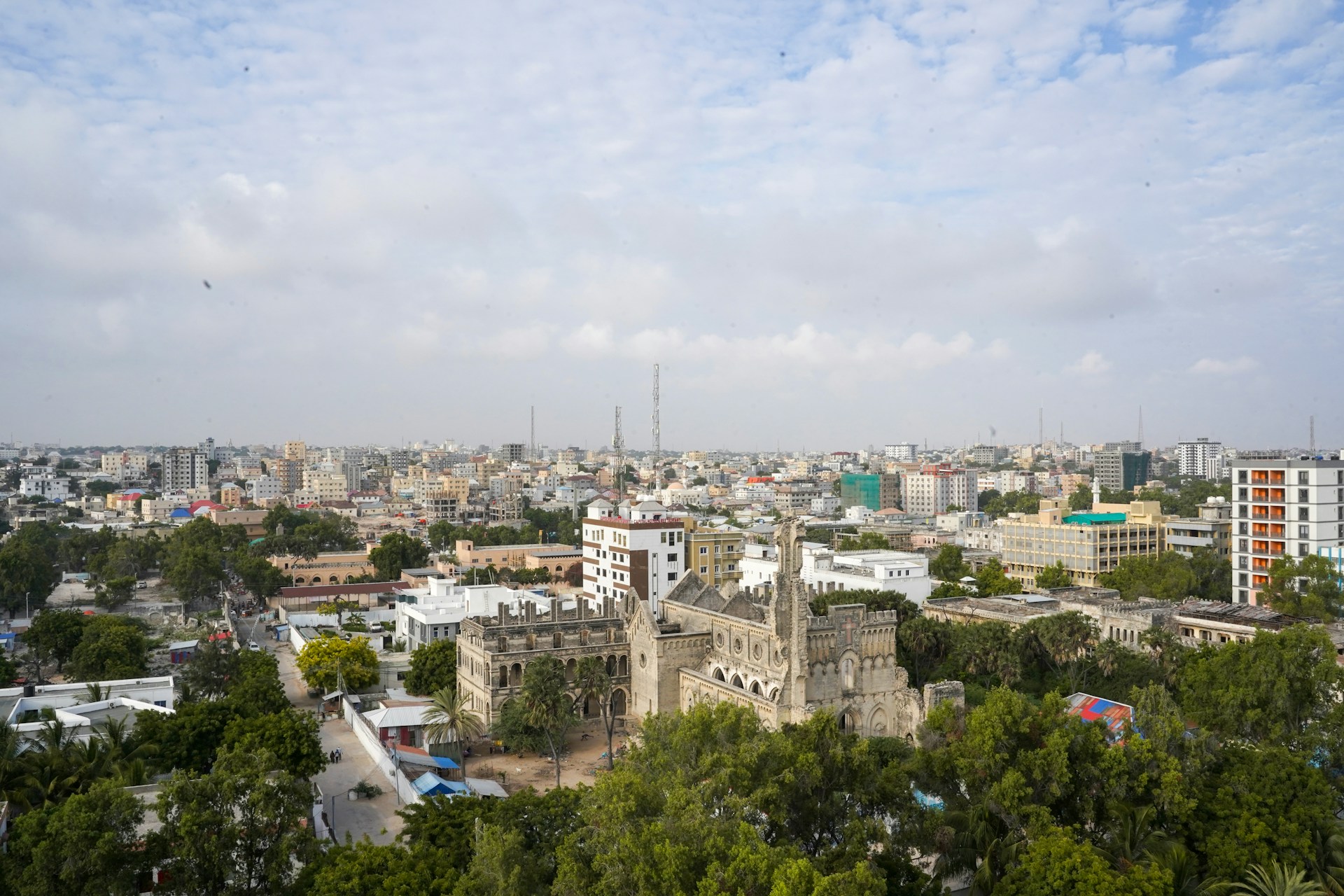
Photo – MOHAMED ABUKAR on Unsplash
By Zorina Grey CBNC News
Washington has agreed to keep paying for the international military operation in Somalia for one more year, and the American taxpayer is entitled to ask what that year will buy that the last nineteen did not. The State Department confirmed on Sunday that the United States will support a one-year renewal of the mandates for the United Nations Support Office in Somalia and the African Union mission it supplies, reversing the cutoff Washington announced in July.
The strategic objective is narrow and stated plainly by the State Department itself. A department spokesperson said the renewed support would help contain threats from Somalia and prevent a broader regional security crisis that would undermine American interests. The alternative that remains in place is the one that has existed since 2007: a foreign force fed, fueled, and evacuated on an international budget while the Somali government promises to take over its own security at some later date.
The record behind that promise is not encouraging. In its July letter announcing the end of funding, Washington said Mogadishu had failed to sustain progress against al-Shabaab, take ownership of its security functions, or undertake serious security sector reform. The United States has provided nearly $2 billion to United Nations missions in Somalia since 2007 and more than $1.6 billion to the African troops deployed there, according to figures Washington supplied at the time. Hundreds of millions more went to Somali security forces, and billions more went to humanitarian and development aid.
The support office handles the fuel, rations, water, medical evacuation, and transport that keep the African Union force in the field. Its budget for the year ending in June 2027 was set at $481.4 million. When money ran short earlier this year, deliveries to Somali forces were suspended from May to July and resumed only after Britain contributed about £1 million in August.
The collectivist claim is that only an open-ended multilateral commitment can hold the line against al-Shabaab. That claim fails on incentives. A government that knows the fuel trucks will always arrive has little reason to build the army that would make them unnecessary. Nineteen years of guaranteed logistics have produced a security force that still cannot stand on its own, and the July letter said as much in diplomatic language.
The State Department appears to understand the problem. Its spokesperson said there is no indefinite commitment and urged Somalia and the African Union to plan for what the department called more sustainable regional security solutions. The current United Nations authorization expires on December 31, and a new Security Council resolution will set the troop ceiling and the funding terms. No dollar figure for the American share has been disclosed.
That is where the real test lies. A one-year renewal can serve American interest if it is a bridge with a fixed end, a hard deadline for Somali forces to assume the mission, and an African Union that carries more of its own weight. It serves no American interest if it becomes the twentieth consecutive year of the same arrangement under a new label.
Washington cut the money in July because Somalia had not earned it. Somalia has done nothing since July to earn it back, and the bill is being paid again anyway.
Sources:
https://dailycaller.com/2026/11/17/us-reverses-cuts-un-support-office-in-somalia-unsos-military-funding-africa
https://www.afp.com/en/reversal-us-fund-un-military-support-somalia-another-year
https://defencemena.com/us-reverses-somalia-aussom-unsos-one-year-renewal/
https://www.hiiraan.com/security4/2026/Nov/206793/un_security_council_to_discuss_aussom_funding_crisis_as_us_supports_oneyear_extension.aspx
https://somaliatoday.com/security/somalia-welcomes-us-reversal-on-funding-for-au-peacekeepers-2026-11-16/