By Zorina Grey CBNC News
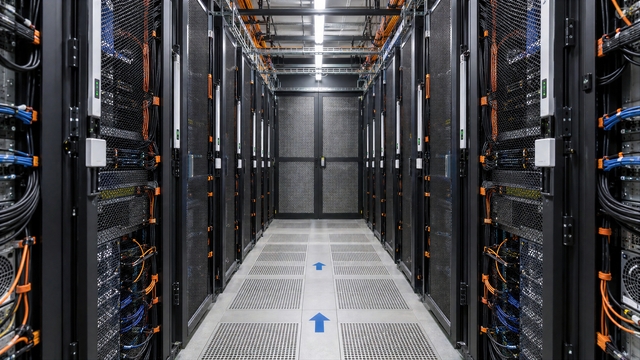
The United States on Monday closed the back door that let Chinese companies rent the American computing power they are barred from buying, as the Commerce Department’s Bureau of Industry and Security issued an interim final rule bringing overseas data centers under the same export controls that already govern the physical shipment of advanced American chips.
The rule has four parts. Data centers abroad that remotely supply significant volumes of compute to companies headquartered in China, Macau, or the other restricted destinations in Country Group D:5 must now obtain a license, and data centers, foreign foundries, and chip exporters must run due diligence on direct and indirect ownership by those parties. A new license requirement applies to advanced chips sent to Indonesia, Malaysia, Singapore, Thailand, and Brazil, which the department describes as presenting a higher-than-normal risk of diversion. Chip designers in licensed destinations face fewer pathways to obtain advanced-node production through foundries in third countries. The rule also formally rescinds the regulations implementing the Biden administration’s AI Diffusion Rule, which was never enforced and which BIS announced it would abandon in May 2025.
The department said the rule was written by and at the direction of the Treasury Department and the National Security Council. Its stated purpose is narrow: to ensure that existing restrictions on sensitive American technology cannot be bypassed through remote computing arrangements in third countries. Commercial recommender systems, such as those run by online retailers and social media companies, are exempt. Chips bound for companies headquartered in the United States, or whose ultimate parent is American, are exempt from the five-country license requirement provided reporting conditions are met.
That exemption is the center of the policy. American firms keep building abroad without new paperwork. Foreign intermediaries that resell American capacity to restricted buyers lose the arrangement.
The collectivist claim is that computing power is a borderless commons and that any restriction simply pushes customers toward alternative suppliers. The claim fails on its own logic. Companies in China rent American chips through Singapore and Malaysia precisely because no equivalent product is available to them at home on the same terms. If the alternative were equal, the rental market would not exist. The rule does not deny anyone a commodity. It denies a discount on a scarce American asset to buyers who were already barred from purchasing it outright.
The incentives are also plain. Commerce said it will monitor countries that tolerate evasion and may respond with import restrictions, new license requirements, a downgrade of the country’s export-control status, Entity List designations, and temporary export prohibitions. Governments in the five named countries now face a choice between hosting a transshipment trade and keeping their own access to American technology. That is leverage the United States holds because it owns the product.
The timing carries weight. The rule arrives as President Trump travels to Manila and then Shenzhen for meetings with Chinese President Xi Jinping and Russian President Vladimir Putin, and days after Nvidia chief executive Jensen Huang resigned amid allegations involving a former executive of Singapore-based Megaspeed. The rule does not mention Nvidia by name. It does change the terms on which every American chip maker sells into Southeast Asia, and it gives Washington a firmer position at the table than an open rental market would have.
The strategic objective is to keep the most valuable American technology from being turned into a subsidy for the countries the United States restricts. The alternative that remained in place until Monday was a paper control on shipments with no control on use. American companies paid to design the chips, American taxpayers paid to enforce the export rules, and restricted buyers rented the result by the hour through a third country.
Sources:
bis.gov/media/documents/rin-0694-ak50.pdf
media.bis.gov/sites/default/files/documents/BIS%20Issues%20Rule%20Addressing%20Remote%20Access%20to%20American%20Super%20Intelligence%20Technology.pdf
ijr.com/discover/article/howard-lutnick-maria-cantwell-tim-scott-commerce-department-nvidia-jensen-huang-22290715-458c-45c3-97a6-df85d7200c58
arstechnica.com/tech-policy/2026/11/us-moves-to-cut-chinas-remote-access-to-ai-chips
apnews.com/article/nvidia-export-controls-chips-china-remote-access-60f868d3bb430b85a8657b27d421096e