Photo – Screen Shot Army.Mil
By Zorina Grey CBNC News
American counterintelligence officers and the FBI helped put a senior U.S. Army soldier in a British jail cell on Tuesday, on suspicion that he worked for Russian intelligence from inside a NATO command that handles alliance secrets. The soldier is 41 years old. British counterterrorism police arrested him near Gloucester, in the west of England, and are holding him at a London police station. His name has not been released.
He was assigned to the Allied Rapid Reaction Corps at Imjin Barracks, the NATO headquarters built to direct alliance ground forces in a crisis. ABC News reported that a small contingent of American intelligence soldiers works at that base and processes part of the alliance’s intelligence flow. British police said the arrest falls under sections one and three of the National Security Act 2023, which cover obtaining or disclosing protected information and assisting a foreign intelligence service. The police statement named the foreign country plainly. It is Russia.
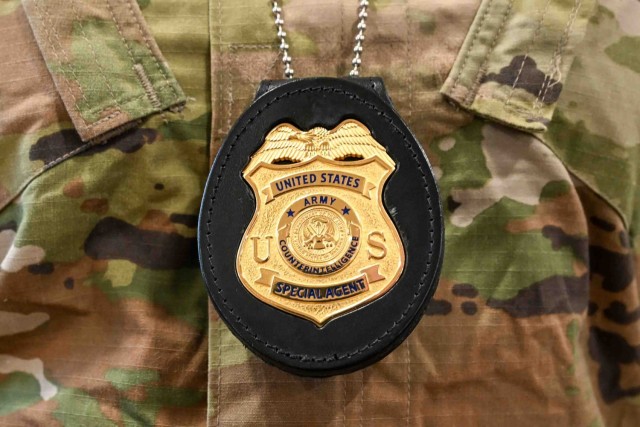
The case was not a British discovery handed to Washington after the fact. Brigadier General Sean Stinchon, commanding general of U.S. Army Counterintelligence Command, credited the joint work of British police and the FBI and called the alleged conduct a reminder that insider threats are real and persistent. FBI Director Kash Patel said the Bureau has no tolerance for anyone who breaks an oath to the United States and endangers American security. That is the correct posture. A soldier who sells secrets is not a personnel problem. He is a breach in the wall.
The prevailing alliance claim holds that shared multinational headquarters make every member safer, because pooled intelligence and integrated staffs multiply what each nation can see. The claim fails on incentives. A multinational headquarters multiplies access, and access is the commodity a hostile service buys. Every additional desk, badge, and liaison officer is another door, and Moscow needs only one of them to open. The United States carries the largest share of the intelligence in that system and therefore carries the largest share of the exposure when it leaks.
Geography sharpens the point. Gloucestershire is also home to RAF Fairford, where American bombers operate. The arrest came one day after U.S. commanders repositioned refueling aircraft away from RAF Mildenhall over a separate threat linked to Iran, the second such move from a British base in two months. Washington chose to protect its aircraft on its own timetable. The pattern is that American forces in Britain now require American vigilance that the host country has not demonstrated it can provide on its own soil, where British security services themselves say Russia and Iran have used proxies to commit crimes.
British law allows police to hold the soldier for up to 14 days without charge. ABC News reported that he could face charges from both British authorities and the U.S. Army, and espionage counts under military law can carry life imprisonment. The Army should insist on its own jurisdiction. An American soldier who is accused of betraying American secrets should answer to an American court.
The investigation is ongoing, and searches continued at two locations in Gloucestershire. What the soldier passed, and for how long, has not been disclosed. The answer will determine the real damage. The lesson is already visible. The alliance asks the United States to place its secrets inside shared buildings on foreign soil, and the United States then pays to hunt the leaks.
Sources: https://www.foxnews.com/world/senior-us-army-soldier-arrested-uk-suspicion-spying-russia https://www.stripes.com/theaters/europe/2026-11-10/us-army-soldier-arrested-uk-23426494.html https://abcnews.com/International/us-soldier-accused-spying-russia-arrested-uk-officials/story?id=138023103 https://www.nbcnews.com/world/united-kingdom/us-army-member-arrested-uk-suspicion-working-russian-intelligence-rcna608616 https://www.bbc.com/news/articles/c6d7q77xgw0vo