By Zorina Grey CBNC News
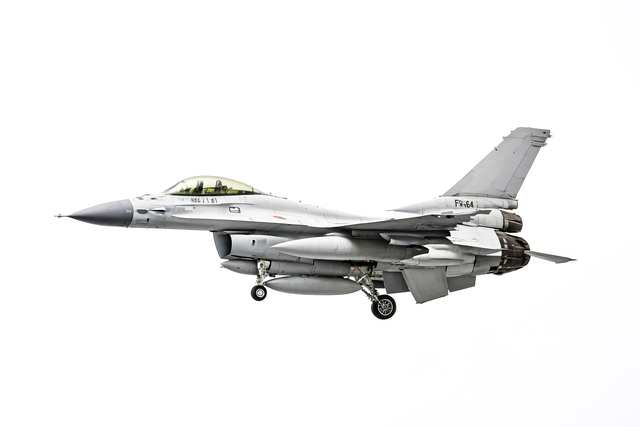
Three new American F-16V Block 70 fighters landed at Chihhang Air Base in Taiwan on Sunday as Chinese naval and coast guard forces rehearsed cutting the island off from the air and the sea. The strategic objective is plain: put American fighters into Taiwanese hands so the island can contest an isolation campaign, rather than wait for a rescue that Beijing is already practicing to block.
The three jets, serial numbers 6729, 6731, and 6732, landed at the base in Taitung County at about 11 a.m. on November 8, 2026. Taiwan’s Air Force Command Headquarters said it would proceed with induction training as planned and gradually build the aircraft toward initial operational capability. The jets left Lockheed Martin’s factory in South Carolina last Tuesday. They are the second shipment under a 2019 American approval to sell Taiwan 66 F-16Vs and related equipment for approximately $8 billion. The first two aircraft arrived on October 2. Deliveries were originally expected to begin in 2023 and finish in 2026, but technical problems pushed that timetable back. China reiterated its “firm” opposition to the sales after the first two aircraft reached the island last month. The collectivist claim that follows those protests is that American fighters provoke Beijing and that the safer course is to slow the pipeline and trust diplomacy to keep the strait quiet. That claim fails against capacity and against incentives.
On November 6, the Institute for the Study of War and the American Enterprise Institute reported that the People’s Republic of China may be conducting a major, unannounced military exercise that simulates surrounding and isolating Taiwan. Taiwanese National Security Council Secretary-General Joseph Wu said on November 3 that more than 100 People’s Liberation Army Navy and China Coast Guard vessels were operating in the western Pacific. The report said the vessels appeared in two main concentrations between Taiwan and its principal partners.
The first concentration consists of four task forces drawn from the Eastern, Northern, and Southern Theater Commands and operating between Taiwan and Guam, including the Liaoning carrier strike group, which moved into the western Pacific through the Philippines’ Basilan Strait between October 23 and October 26. The second includes at least six China Coast Guard vessels and an unspecified number of navy ships surrounding Taiwan. Taiwan’s Ministry of National Defense detected 49 air sorties around the island on November 2, an unusually high number, including 36 sorties south of Taiwan that may have supported the task forces farther east.
Satellite imagery from November 2 showed the Fujian, China’s most advanced carrier, leaving its base at Sanya on Hainan and heading due east, possibly toward southern Taiwan. The deployments amount to a significant share of Chinese naval combat power, including two of the navy’s three carriers and at least four of its ten guided-missile cruisers. The institute said the number of ships and the geographic range exceed the PLA’s Justice Mission 2025 exercise around Taiwan, and that the purpose is to prepare coastal commands to keep outside forces from reaching the island in a crisis.
Beijing has not announced or named the activity, a break from the last four major exercises it staged against Taiwan. The institutes assessed that the silence may be intended to make isolation look routine, to show that the PLA can shift from peacetime posture to combat operations with less warning, and to erode Taiwanese confidence in its own defense and in America’s willingness to come to its aid.
Three new American fighters do not match a hundred Chinese ships. They do change the inventory Taiwan can put in the air while that practice continues. The alternative left in place is a delayed fighter pipeline and an isolation drill that Beijing declines to name. The contradiction is simple. Those who call the jets a provocation are asking America to withhold the aircraft while China rehearses cutting Taiwan off. The American cost of treating that rehearsal as ordinary traffic is a first island chain that Beijing has already begun to close.
Sources
https://focustaiwan.tw/politics/202611080004
https://www.taiwannews.com.tw/news/6473506
https://understandingwar.org/research/china-taiwan/china-taiwan-update-november-6-2026/
https://www.taipeitimes.com/News/front/archives/2026/11/08/2003867351
https://www.aa.com.tr/en/asia-pacific/taiwan-receives-2nd-batch-of-f-16-block-70-fighter-jets-from-us-amid-chinas-opposition/4115804