By Jennifer Sanchez CBNC News
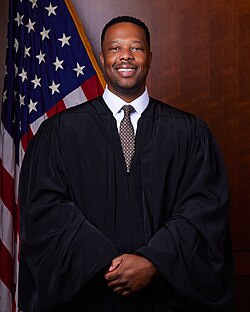
U.S. District Judge Jamal N. Whitehead (Biden) entered a 14-day temporary restraining order on Thursday, November 5, 2026, barring the Department of Justice and the Department of Homeland Security from demanding that Washington election officials set aside ballots of voters appearing on a federal suspected-noncitizen list and from threatening those officials with prosecution for counting ballots as state law requires. Whitehead, nominated by President Joe Biden on January 3, 2023, confirmed by the Senate on February 28, 2023, and commissioned to the Western District of Washington on March 14, 2023, partially granted relief sought by OneAmerica Votes, the Latino Community Fund of Washington State, and the United Food and Commercial Workers International Union.
The order covers Attorney General Todd Blanche, Homeland Security Secretary Markwayne Mullin, Acting U.S. Attorney Pete Serrano of the Eastern District of Washington, and First Assistant U.S. Attorney Neil Floyd of the Western District. It prohibits demands that Washington election officials remove specific voters from the rolls, refuse them ballots, or leave their ballots uncounted, and it prohibits threats of criminal prosecution or investigation for refusing to comply. The government may still investigate and prosecute illegal voting, share information, state its view of federal law, and ask for cooperation. Whitehead did not enter relief against President Donald Trump as a named defendant and denied the government’s request to stay the order pending appeal. The temporary restraining order lasts 14 days. Counties must certify results by November 24. The government has until November 12 to oppose a longer-lasting order, with argument set for November 18.
The underlying federal letters went out October 26, eight days before Election Day. Serrano and Floyd sent Secretary of State Steve Hobbs a list of roughly 400 registered voters the Justice Department treated as suspected noncitizens, gave Hobbs 24 hours, and directed that county officials hold signature checks or counting on those ballots until citizenship could be determined. At a press conference that day, Floyd warned that anyone who helps someone vote illegally would also be guilty under an aiding-and-abetting theory. Hobbs refused two days later. Washington’s review found the list unreliable. At least 62 people on it had not been sent a ballot because their registrations were canceled, inactive, or could not be found. The state reported that the list included United States citizens who had already shown proof of citizenship. Nothing in the record, Whitehead noted, showed that anyone on the list had been charged with a crime. Serrano said on radio the next day that the department could send letters to county auditors and described the goal as keeping those ballots from being counted.
The government told the court it had taken no further action after October 26 and that the letter was only a request Washington was free to refuse, pointing to recent Ninth Circuit treatment of related California demands. Whitehead rejected that characterization. He wrote that the government may ask a state to set ballots aside but may not compel one to do so, and that on this record the defendants did not ask. He wrote that they directed Washington to set aside specific voters’ ballots, set a deadline, and told election officials they would be prosecuted if they counted those ballots as state law requires. He further wrote that a threat of prosecution made for that purpose is not legal advice; it is the pressure that makes the demand work, and the order restrains the two together. He found union members faced a real risk of being discouraged from voting or having ballots set aside and held that only one plaintiff needed standing, so he did not decide whether the other two groups had it. He wrote that voters who followed the rules should not lose their votes to a list that even its authors admit may include citizens.
The holding’s operational effect is that, for the next two weeks while Washington counties count and certify ballots already cast, DOJ may not demand set-aside of a registered voter’s ballot because the voter’s name appears on the federal list and may not threaten officials with prosecution for counting votes as state law requires. The America First election-integrity position is that noncitizen voting is a federal crime and that sequestration pending citizenship verification protects citizen ballots from dilution. Whitehead’s order treats the October 26 package as compulsion rather than request and freezes the coercive half of that package in Washington while counting continues. The California track, including the Supreme Court’s November 2 refusal to grant the administration a limited injunction there and the separate Ninth Circuit stay fight over Judge Trina L. Thompson’s temporary restraining order, is a different case. This order is Washington-only, time-limited, and immediately effective. The stay request pending appeal was denied. The TRO stands for fourteen days unless extended.
Sources:
https://justthenews.com/government/courts-law/judge-demands-doj-stop-pressuring-washington-state-election-officials
https://www.courthousenews.com/feds-barred-from-pressing-washington-state-to-toss-voters-ballots-for-now/
https://www.democracydocket.com/news-alerts/federal-judge-blocks-trump-doj-from-interfering-with-washington-states-elections-ballot-counting/
https://www.fjc.gov/history/judges/whitehead-jamal-norman