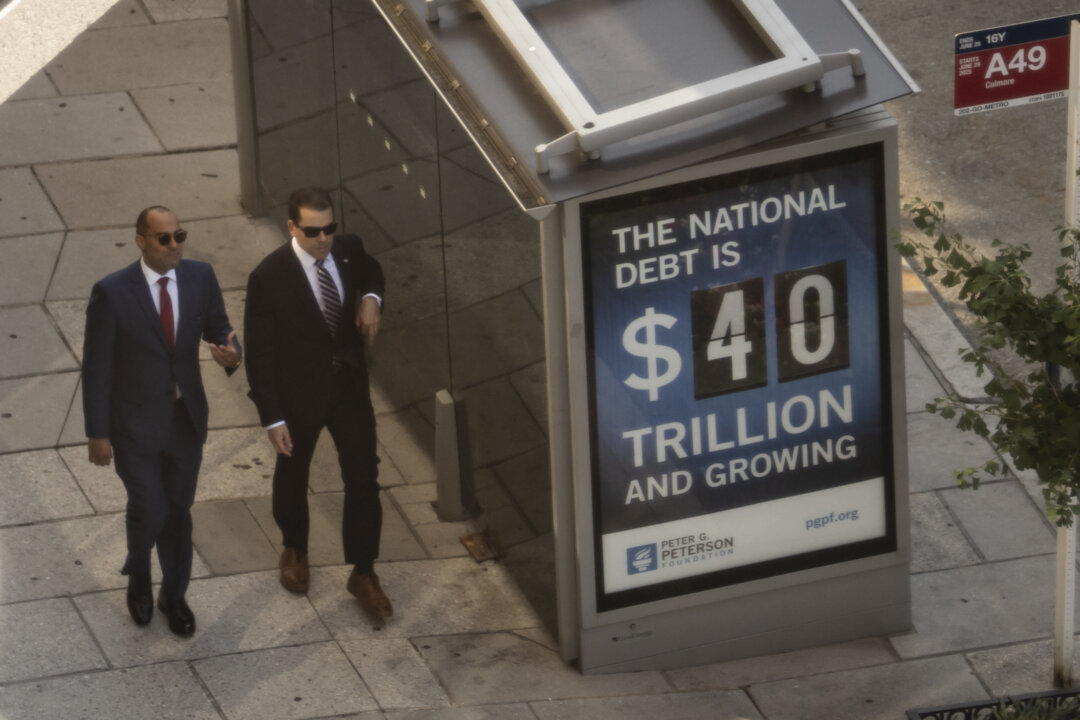
Higher interest payments and rising costs for major benefit programs pushed the U.S. budget deficit to its highest level in five years, new Treasury Department numbers show.
The budget shortfall—the gap between revenues the federal government collects and how much it spends—widened by more than $200 billion, or about 12 percent, to $1.99 trillion in fiscal year 2026, which ran from Oct. 1 to Sept. 30.
This marks one of the highest deficits in the nation’s history.
Federal revenues hit an all-time high of $5.4 trillion, rising $169 billion, or 3 percent, from $5.24 trillion in the previous fiscal year.
Outlays climbed $386 billion, or 6 percent, to a record high of $7.4 trillion, from $7.01 trillion in the prior fiscal year.
This was fueled by a record $1.36 trillion in debt-servicing payments, which climbed $144 billion, or 12 percent—higher than the Treasury’s $1.301 trillion…