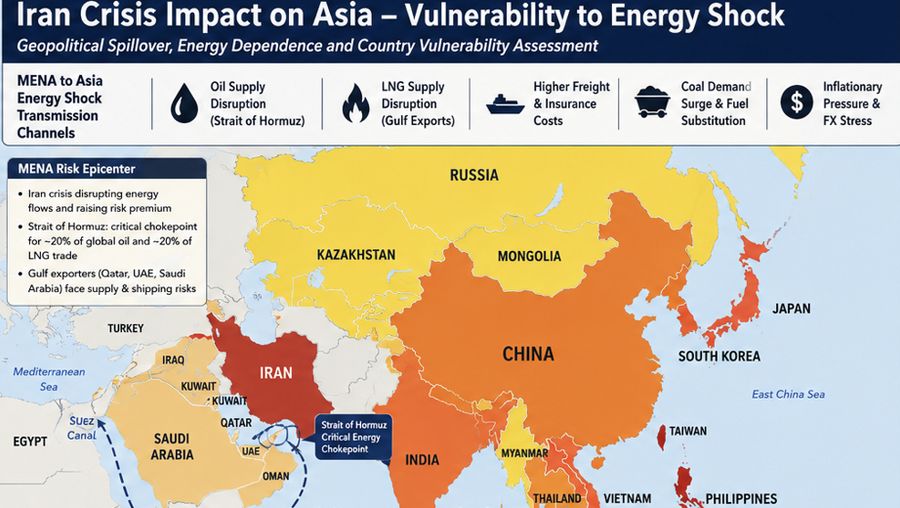
In the Asian shock, four transmission channels play a role. In the case of oil, elevated risk premium is coupled with physical tightening via Strait of Hormuz disruptions.
Lliquefied natural gas (LNG) poses a more severe constraint than oil and thus structural tightening of Asian gas balances. Meanwhile, coal substitution is experiencing a short-term demand surge in Asia, especially in India, China and Southeast Asia.
On the economic side, countries are struggling with imported inflation, foreign exchange pressure, and painful policy trade-offs between subsidy support and fiscal stability.
The shock is no longer a temporary price spike but a sustained supply reordering. The International Energy Agency (IEA) projects large-scale oil drawdowns. LNG disruptions are removing 20% of global LNG flows at peak disruption, which will tighten Asian supply chains…